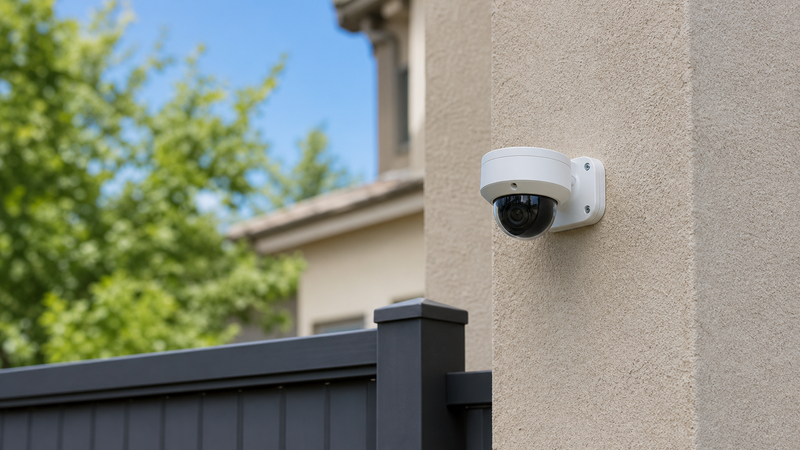
The best dummy camera to buy is one that closely mimics the housing, mounting style, and visible features of a real security camera — including a realistic blinking LED, weatherproof casing, and a believable cable or mount setup. Dome and bullet-style housings are the most recognized camera shapes, and either works well when placed at natural surveillance angles — entry points, driveways, parking areas, and hallways.
Here’s the thing about dummy cameras: they work on the same principle as a deadbolt. Most people don’t pick locks. Most opportunists don’t case a location methodically — they look for the path of least resistance. A visible camera, real or not, changes that calculation. I’m not telling you to rely on a fake camera alone. But I am telling you that a well-placed decoy is a legitimate layer in a layered security plan, and a poorly chosen one is worse than nothing because it gives you false confidence. Let me help you choose correctly.
What makes a dummy camera look realistic enough to deter someone?
The short answer: it has to look exactly like what a real camera looks like in real-world conditions. That means housing shape, mounting hardware, cable presence, and a blinking LED light that mimics an active recording indicator.
Most people — including most would-be intruders — recognize two camera shapes: dome cameras (round, ceiling-mounted) and bullet cameras (cylindrical, wall or eave-mounted). Both are common in retail stores, apartment buildings, and homes. If your dummy camera matches one of these shapes and is mounted where a real camera would logically go, it reads as real at a glance.
The LED is critical. A slow, rhythmic blink — similar to what many real cameras show — signals activity to anyone watching. A fast, cheap strobe looks fake immediately. Look for a dummy camera with a single LED that pulses at roughly one blink every two to three seconds. That interval mirrors many actual recording indicators.
Cable management matters more than most people realize. A camera with no visible wiring, or wiring that goes nowhere, is a flag. Run a dummy cable down the wall and into a junction box or conduit — even if it’s not connected to anything. The visual completeness is what sells it.
Where should you mount a dummy camera for maximum deterrence?
Mount it where a real camera would be — because that’s where someone casing your property expects to see one. Front door, side gates, driveway entry, parking areas, and loading zones for businesses. Eye level is wrong. Real cameras go high: eight to ten feet off the ground, angled down at roughly 30 to 45 degrees.
If you’re protecting a business, think about sight lines. A camera mounted in a corner covers two walls at once. A camera facing directly outward from a flat wall covers a much narrower field. Angle matters even on a dummy — because someone standing outside your building is going to look up, locate the camera, and decide whether they’re in frame. If the camera angle suggests they’re visible, that’s your deterrent doing its job.
For residential use, a dummy camera near the garage, at the back gate, or under a porch eave is effective. Pair it with real exterior lighting. Motion-activated lights plus a visible camera — even a fake one — is a combination that pushes most opportunists to the next address.
If you’re managing a commercial property, I’d recommend reading about dummy cameras for business use specifically. The placement logic and housing requirements are different from residential, and the stakes of a bad placement are higher.
What are the biggest mistakes people make when buying dummy cameras?
The most common mistake is buying based on price alone. A $4 dome camera with a flashing red LED, a plastic chrome finish, and no mounting hardware is going to get identified as fake — fast. Anyone who has spent time around real security equipment will clock it in seconds. Opportunists are often more observant than people expect.
Second mistake: bad placement. I see dummy cameras mounted at eye level on fence posts, or pointed straight out from a wall with no downward angle. Real cameras are mounted high and angled. If yours isn’t, it looks wrong — and wrong-looking cameras don’t deter.
Third: no cable. A camera with no wiring is the clearest sign it’s a prop. Even a short loop of gray or black conduit running down the wall adds realism that a bare camera mount cannot.
Fourth: relying entirely on the dummy. A dummy camera is a deterrent, not a detector. It doesn’t record. It doesn’t alert you. It doesn’t capture evidence. If you want actual recording capability — especially for low-light situations — look at an HD hidden camera with night vision. That’s the tool that actually documents what happens.
Should you mix dummy cameras with real cameras?
Yes — and this is the most tactically sound approach. Place real cameras at your highest-priority points: the front entry, the main parking area, any location where you’d need footage for a police report or insurance claim. Fill in the coverage gaps with dummy cameras to extend the perceived surveillance zone without the cost of wiring every corner.
The critical rule: never make it easy to tell which cameras are real and which aren’t. If all your real cameras are one brand and style, and your dummies are visually different, someone paying attention will figure it out. Match the housing style and mounting approach as closely as possible across all units.
I’ve written more on this exact strategy in whether to mix dummy cameras with real cameras — it covers when the hybrid approach makes sense and when you’re better off going all-real.
For businesses especially, this matters. A retail space with six cameras — two real, four dummy — presents a credible surveillance environment at a fraction of the cost of six fully wired cameras. The key is consistency in appearance and smart placement of your real units.
What features should you check before buying a dummy camera?
Work through this list before you commit to any dummy camera purchase. These are the details that separate a functional deterrent from a prop that fools no one.
- Housing material: Metal or high-grade ABS plastic. Avoid shiny chrome finishes — real cameras are matte black or dark gray.
- LED type and blink rate: Single red or amber LED, slow pulse. Not a fast strobe, not a solid constant light.
- Weatherproofing: If it’s going outside, it needs a weather-resistant rating. A camera that fades, rusts, or warps in three months looks wrong — and signals neglect.
- Mounting hardware: Should include a real-looking mount bracket, not a plastic clip. The bracket is part of what makes it look installed rather than propped.
- Size and scale: Should match the scale of real cameras in that location. Oversized or undersized units look off.
- Cable routing compatibility: Check whether you can run a dummy cable realistically from the mount point.
- Battery compartment: Many dummy cameras run on AA batteries to power the LED. Make sure access is discreet — battery doors visible from the front are a tell.
When does a dummy camera stop being enough?
When you need evidence. A dummy camera does one thing: it discourages people who think they might be watched. The moment an incident actually occurs — a break-in, a theft, a confrontation — the dummy camera gives you nothing. No footage. No timestamp. No face. Nothing to give to police, nothing to submit to insurance.
That’s when a real recording device changes everything. A well-placed HD hidden camera captures usable footage without advertising its presence. These aren’t the obvious dome cameras on the ceiling — they’re embedded in everyday objects, recording continuously or on motion trigger, storing footage you can actually use.
If your situation involves monitoring a specific area closely — an office, a storage room, a home entryway — a hidden camera gives you documentation that a dummy never can. The two tools serve different purposes. Know which one you actually need before you buy.
Frequently Asked Questions About Buying Dummy Cameras
Do dummy cameras actually deter crime?
Yes, when they look realistic and are mounted correctly. Studies on crime prevention consistently show that visible surveillance — real or fake — influences opportunistic behavior. Most property crimes are committed by people looking for easy targets. A camera, mounted at the right height and angle with a visible blinking LED, changes the risk calculation for anyone scoping the location.
How can I tell if a dummy camera looks realistic?
Compare it to photos of actual security cameras installed in real settings. Look for: matte housing in black or dark gray, a slow-pulse LED, a realistic mount bracket, and the ability to route a cable from the unit. If the camera has a shiny chrome body, a fast-strobe LED, or a mount that clearly doesn’t anchor to anything structural, it reads as fake.
Can a smart thief tell the difference between a real and fake camera?
An experienced person can, especially up close. Tells include: no wiring, cheap plastic housing, a fast-blinking LED, and off-scale proportions. This is why placement and housing quality matter. A high-quality dummy mounted at the correct height and angle with a cable run is much harder to dismiss at a glance — which is all the deterrence window you have.
How long do the batteries last in a dummy camera?
Most dummy cameras run on two AA batteries powering only the LED indicator. At a slow blink rate, a good set of alkaline batteries can last three to six months. Check the battery compartment location before buying — a battery door visible from the front of the unit is an immediate tell. Service the batteries on a schedule so the LED never goes dark.
Should I use dome or bullet style dummy cameras?
Match the style to your environment. Dome cameras are standard indoors and in retail or commercial settings — they’re ceiling-mounted and read as professional. Bullet cameras are more common on exterior eaves and walls. Choose the style that matches what a real installation would look like in your specific location. Mismatched styles look improvised.
Is it legal to use dummy cameras?
In most jurisdictions, yes — placing a non-recording dummy camera on your own property is legal. Laws vary by location and situation, so I’d encourage you to check local ordinances, particularly around signage requirements for surveillance in commercial settings. I can’t give legal advice, but the general principle is that a non-recording decoy on your own property is treated differently than an actual recording device.
Can dummy cameras be used outdoors year-round?
Only if they’re rated for outdoor use. Look for weatherproof or weather-resistant ratings. A camera that fades, warps, or corrodes within a season looks neglected — and a neglected-looking security setup signals that no one is paying attention, which is the opposite of what you want. Buy outdoor-rated units for any exterior placement.
What’s the difference between a dummy camera and a hidden camera?
A dummy camera is visible by design — its job is to be seen and create a deterrent effect. A hidden camera is designed to be invisible — its job is to record without being detected. They serve opposite purposes. A dummy camera prevents incidents by being noticed. A hidden camera documents incidents by not being noticed. For full coverage, serious security setups often use both.