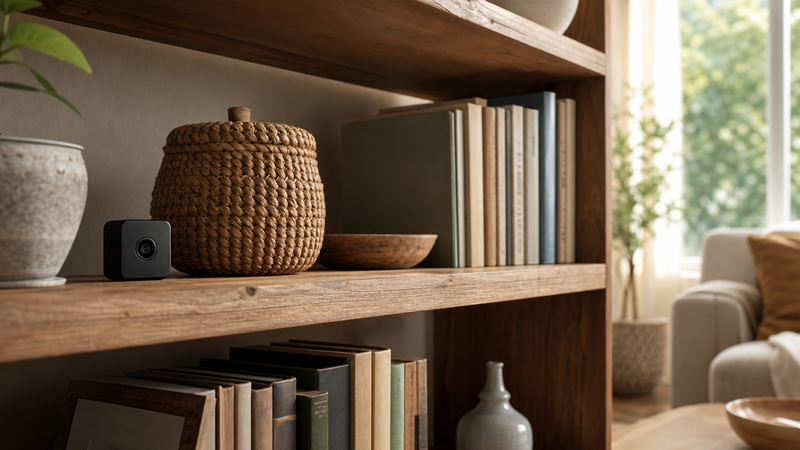
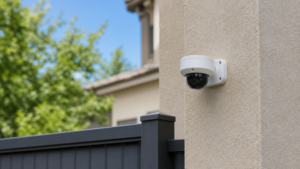
A hidden camera can record anywhere from one hour to several weeks without being detected, depending on three factors: battery capacity, available storage, and whether the camera records continuously or only when triggered by motion. Most battery-powered hidden cameras run between four and thirty-six hours on a single charge. Cameras plugged into a power source and using loop recording or cloud storage can operate indefinitely. Knowing how these variables interact is what separates a camera that works when you need it from one that runs out of power at the wrong moment.
I’ve talked with a lot of people over the years — parents checking in on a caregiver, seniors monitoring their own home, small business owners watching a back room — who bought a hidden camera and didn’t fully understand what they were getting. Not because they weren’t smart. Because nobody explained it plainly. That’s what I want to do here. Walk through the real numbers, the real limitations, and help you make a decision you can trust.
What factors determine how long a hidden camera can record?
Recording duration comes down to three things working together: power source, storage capacity, and recording mode. Change any one of them and your recording window changes significantly.
Power source is the most important factor. Battery-powered cameras are portable and easy to conceal, but they have a ceiling. A small internal battery might give you four to eight hours. A camera with a larger or dedicated long-life battery — like the models you’ll find in a long battery hidden camera category — can push that to twenty-four, thirty-six, or even longer. Cameras that plug into a wall outlet or USB power source don’t have that ceiling. As long as they have power and storage, they keep recording.
Storage capacity is the second variable. Most hidden cameras record to a micro SD card. A 32GB card holds roughly eight hours of HD footage before it fills up. A 128GB card extends that to around thirty-two hours. Many cameras support loop recording, which means when the card fills, the oldest footage is automatically overwritten. That’s what allows a continuously powered camera to record indefinitely — it just keeps cycling. If loop recording is off and the card fills, the camera stops. That’s a detail worth confirming before you rely on any device.
Recording mode is the third piece. Continuous recording drains battery fastest and fills storage fastest. Motion-activated recording — where the camera only records when it detects movement — dramatically extends both. A camera that might last eight hours recording continuously could last several days on the same battery if it’s only triggered by motion. For most home monitoring situations, motion-activated is the smarter setting.
How long does a hidden camera battery actually last in real conditions?
Manufacturer specs are tested under ideal conditions. Real-world use is different. Cold temperatures reduce battery performance. Higher video resolution draws more power. Night vision infrared LEDs — present in cameras designed for low-light environments like a hidden camera with night vision — use more power than cameras recording in standard daylight conditions.
Here’s a realistic breakdown based on typical camera designs:
- Small form-factor cameras (pens, clocks, everyday objects): 2–8 hours continuous, 12–24 hours motion-activated
- Mid-size dedicated battery cameras: 8–15 hours continuous, 24–72 hours motion-activated
- Long-life battery cameras: 20–36+ hours continuous, up to several weeks motion-activated with a large battery pack
- Plug-in cameras with loop recording: indefinite, limited only by storage cycling
If you’re placing a camera in a fixed location — a living room, a home office, an entry point — a plug-in camera with loop recording is almost always the more reliable choice. If you need something portable and discreet, a hidden camera pen or similar compact design works well for shorter monitoring windows, especially when motion activation is enabled.
Does video resolution affect how long a hidden camera can record?
Yes, and it matters more than most people realize. Higher resolution video produces larger file sizes, which fills storage faster and draws more processing power, shortening battery life. A camera recording at 4K resolution will fill a 64GB card faster and drain a battery quicker than the same camera recording at 1080p.
For most monitoring purposes — watching a room, checking on an entryway, keeping an eye on a caregiver — 1080p is more than sufficient. The footage is clear enough to identify people, read details, and document events. You don’t need 4K for that. If you’re monitoring a larger space or need to capture fine details at a distance, an HD hidden camera at 1080p still delivers sharp, reliable footage without the tradeoffs that come with ultra-high resolution.
Setting your camera to the resolution you actually need — rather than the highest available — is one of the simplest ways to extend both battery life and recording duration without buying anything new.
How does motion-activated recording extend a hidden camera’s recording time?
Motion activation is probably the most underused feature in home hidden cameras, and it’s the one that changes the math most dramatically. Instead of recording every minute of an empty room, the camera stays in a low-power standby mode and only begins recording when it detects movement within its field of view.
In a typical home, the amount of time a room is actually occupied — and generating motion — is a small fraction of the total day. A camera set to continuous recording in a spare bedroom might run eight hours and capture mostly nothing. The same camera on motion activation might run four days and capture every event that actually mattered.
Most modern hidden cameras include adjustable motion sensitivity settings. Set it too sensitive and it triggers on light changes or HVAC vents. Set it too low and it misses slow movement. A little testing when you first set up the camera saves frustration later. Give it a day of test recording and review the footage to confirm the sensitivity is calibrated for your specific environment.
What storage options allow a hidden camera to record the longest?
Micro SD cards are the most common storage method and the most practical for most users. They’re inexpensive, easy to swap out, and work in virtually every hidden camera on the market. For longest recording duration, use the highest-capacity card your camera supports — typically 128GB or 256GB — and enable loop recording so the camera never stops due to a full card.
Some cameras support cloud storage or Wi-Fi upload, which offloads footage in real time and eliminates local storage limits entirely. These options require a consistent Wi-Fi connection and usually a subscription service, but they remove the storage ceiling completely. The tradeoff is that they use more power and depend on your network staying up.
For situations where network access isn’t reliable — or where you want recordings stored locally for privacy reasons — a high-capacity SD card with loop recording is the most dependable setup. It’s simple, doesn’t depend on external services, and works the same way every time.
Can hidden cameras record in complete darkness without being detected?
This is one of the most common questions I get, and the answer depends on the camera design. Standard hidden cameras cannot record usable footage in complete darkness. Cameras equipped with infrared (IR) night vision can — the IR LEDs are invisible to the human eye but illuminate the space for the camera’s sensor.
The tradeoff is that IR night vision increases power draw, which reduces battery life. It also produces footage in black-and-white rather than color. For elder care monitoring, checking on a child’s room at night, or watching an entry point in a dark exterior space, IR night vision is worth that tradeoff. For daytime monitoring, it’s not needed.
If you’re considering a camera for low-light or overnight use, it’s worth reading more about what hidden camera works best in low light for elder care monitoring — that post covers the specific needs of overnight home monitoring in more detail.
How can you extend a hidden camera’s recording time without buying a new camera?
If you already have a hidden camera and want to get more recording time out of it, there are several practical steps that don’t require purchasing anything new.
Enable motion activation if it’s available and not already turned on. Lower the recording resolution to 1080p or even 720p if you don’t need maximum image quality. Use the largest micro SD card your camera supports. Keep the camera in a temperature-stable environment — extreme cold or heat both affect battery performance. If your camera has a Wi-Fi streaming feature you aren’t using, disable it — Wi-Fi draws power even when nothing is being transmitted.
If none of those steps give you the recording window you need, then it’s time to look at a camera designed specifically for longer runtime. The difference between an entry-level camera and a dedicated long-battery model can be measured in days, not hours.
Frequently Asked Questions About Hidden Camera Recording Time
How many hours of footage will a 32GB SD card hold?
A 32GB micro SD card holds approximately six to eight hours of 1080p HD footage recorded continuously. At lower resolutions like 720p, that extends to ten to twelve hours. If your camera records at higher resolutions like 4K, that same card fills in two to three hours. Card capacity and resolution together determine your storage window before loop recording kicks in or recording stops.
Will a hidden camera keep recording when the SD card is full?
Only if loop recording is enabled. With loop recording on, the camera automatically overwrites the oldest footage when the card fills, allowing it to record indefinitely. With loop recording off, the camera stops recording when the card is full and does nothing until the card is cleared. Always confirm whether loop recording is enabled before relying on a camera for extended monitoring.
Do hidden cameras drain faster when using night vision?
Yes. Infrared LEDs used for night vision draw additional power from the battery, reducing overall recording time. A camera rated for twelve hours of daylight recording might deliver eight to ten hours when night vision is active throughout. If you need overnight monitoring, plan for shorter intervals between charges, or use a plug-in camera rather than a battery-powered model.
What is the longest a battery-powered hidden camera can record?
The longest battery-powered hidden cameras on the market can record for several weeks on a single charge — but only when set to motion activation in environments with infrequent activity. Under continuous recording, most dedicated long-battery cameras top out at twenty to forty hours. The combination of a large battery, motion activation, and modest resolution settings produces the longest possible runtime.
Is it legal to record video with a hidden camera in my own home?
In most U.S. states, recording video in your own home is legal. The common restrictions involve audio recording and locations where people have a reasonable expectation of privacy, such as bathrooms or bedrooms used by guests. Laws vary by state. If you have specific legal questions about your situation or location, consult a local attorney. I don’t give legal advice — I give practical product guidance.
Can a hidden camera be detected by a cell phone or another device?
Wi-Fi enabled hidden cameras can potentially be detected by network scanning apps that show all devices connected to or broadcasting on a network. Cameras that use infrared night vision can sometimes be spotted with a smartphone camera, which may pick up IR light as a faint glow. Battery-powered cameras with no wireless transmission are the hardest to detect because they emit no signal.
Should I use continuous recording or motion activation for home monitoring?
For most home monitoring situations, motion activation is the better choice. It extends battery life dramatically, reduces the amount of footage you have to review, and focuses recording on moments when something is actually happening. Continuous recording makes more sense when you need a complete, unbroken record — for example, in a business environment where activity is constant throughout the day.
What is the smallest hidden camera that still records good-quality video?
Very compact hidden cameras — pen-style cameras, button cameras, and small object-embedded designs — can record at 1080p and produce clear, usable footage. The tradeoff is battery size: a smaller housing means a smaller battery and shorter recording time. If discretion is the priority and recording windows are short, a compact design works well. If you need longer runtime, a slightly larger form factor gives you the battery capacity to match.
The goal with any of this isn’t to build a surveillance system. It’s to have reliable eyes on the spaces that matter to you — without having to wonder whether the camera was actually recording when something happened. That uncertainty is what I want to help you eliminate.
If you’re still working out which setup fits your situation, browsing the hidden camera glasses and other wearable options alongside fixed-mount cameras gives you a clearer sense of the full range. Start with where you need coverage, then match the camera to that specific need. That’s the most reliable way to do it.