Diversion safes are effective against the vast majority of residential burglars — not because they are impenetrable, but because most burglars are not looking for a fight with a locked box. They are looking for fast, obvious value. A can of shaving cream on a bathroom shelf, a book on a nightstand, a can of soup in a kitchen cabinet — these things don’t register as threats to investigate. That invisibility is the mechanism. And for the type of burglary most Americans will actually face, it works.
Here’s what most people get wrong about home security: they think about it the way a security engineer would. They want ratings, certifications, tamper resistance. That mindset makes sense for a gun safe or a bank vault. But residential burglars are not security engineers. They’re opportunists under a time clock. The average home break-in lasts between five and twelve minutes. Understanding that changes everything about how you should think about protecting your valuables — and why a fake can of hairspray might outperform a bolted lockbox in certain situations.
How does a diversion safe actually fool a burglar?
The answer is not about deception in a sophisticated sense. It’s about target selection. A burglar entering a home is running a quick mental algorithm: what’s obviously valuable, where is it likely to be, and how fast can I get it and leave? Jewelry boxes, sock drawers, master bedroom nightstands, home offices — these are the high-probability hits. They go there first, and they move fast.
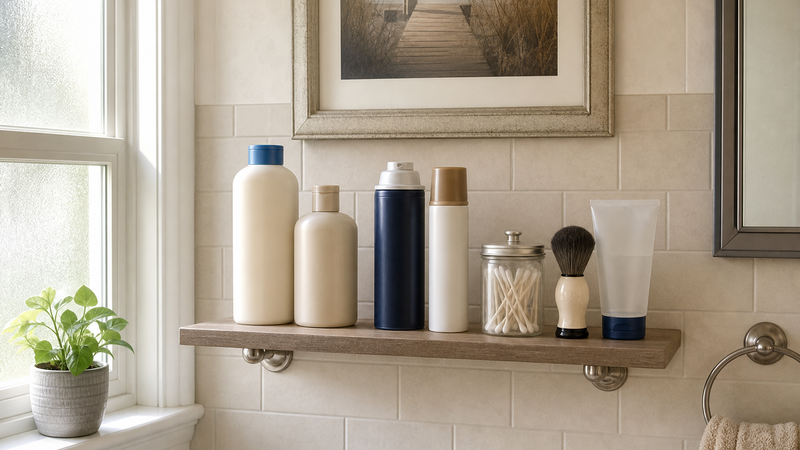
A diversion safe works by sitting completely outside that algorithm. It doesn’t look like a target. A diversion safe designed for the bathroom — disguised as a shampoo bottle, a can of Ajax, or a bottle of conditioner — blends into a room that a burglar may walk past entirely. Even if they do enter that bathroom, they’re scanning for jewelry on the counter, prescription bottles in the medicine cabinet, maybe some cash. A shampoo bottle sitting in the shower gets no second glance.
The psychological mechanism here is cognitive load. A burglar moving fast through a home is not stopping to pick up every object and evaluate it. Pattern recognition takes over, and familiar household objects get dismissed automatically. The diversion safe is betting on that dismissal. More often than not, it wins.
What kind of burglar does a diversion safe actually stop?
This is the question that separates honest security advice from marketing. Diversion safes are not effective against every type of intruder. They perform best against the opportunistic, smash-and-grab burglar — the most common type in residential settings. Someone who picked your house because a window was unlocked, who wants to be in and out in under ten minutes, who is not casing your home for weeks and certainly not searching your bathroom shelf for a fake soup can.
They are less effective against a targeted intrusion. If someone has specific knowledge of your home — knows you keep cash or valuables in a particular place, has been inside before, or is taking their time because they know you’re gone for the week — a diversion safe requires more careful placement and a better cover story. A single fake can sitting prominently on an otherwise bare kitchen counter stands out. Context matters. The fake container has to belong.
The practical takeaway: for most homeowners, most of the time, a diversion safe used correctly addresses the real threat. The sophisticated targeted burglar is a real concern but a statistically rare one for average residential settings.
Where should you place a diversion safe to make it most effective?
Placement is where diversion safes succeed or fail. The object has to make sense in its environment. A can of WD-40 in a garage workshop is invisible. The same can sitting on a kitchen counter next to a coffee maker looks out of place. Out-of-place objects attract attention, which is the opposite of what you want.
The best environments are rooms or spaces with natural clutter — bathrooms, laundry rooms, garages, pantries, and kitchen cabinets. A bathroom diversion safe is one of the highest-performing options because bathrooms already contain dozens of similar-looking containers. A burglar in a hurry has no reason to pick up every bottle on a shelf. One more bottle registers as noise, not signal.
What you want to avoid: placing a diversion safe in a room that burglars prioritize and then leaving it as the only object of its type in the area. A single book on an otherwise empty shelf. A single can in an otherwise empty cabinet. Isolation draws attention. Blend it into a group of similar-looking items. That’s the whole game.
Can diversion safes work as part of a layered home security plan?
Yes — and this is actually the smarter framing. Diversion safes are not a replacement for other security measures. They are a complement to them. Think of home security in layers: deterrence, detection, delay, and concealment. Diversion safes operate in that last layer. They assume someone has already gotten past your locks and alarms, and they give your irreplaceable items — a backup credit card, emergency cash, a spare key, a piece of heirloom jewelry — a hiding place that doesn’t look like a hiding place.
That layered approach is what serious security planning looks like. A visible deadbolt and alarm system handle deterrence. Motion-sensor lighting handles detection. A diversion safe handles concealment for items you can’t bolt to the floor. Each layer does a different job. If a burglar gets past your deterrence layer — which sometimes happens — the diversion safe is still working for you.
If you carry other personal security tools — a stun gun, pepper spray, or a personal alarm — you already understand layered thinking. The same logic applies inside your home. You don’t rely on one tool. You build overlapping coverage. Diversion safes fit into that framework naturally. If you’re thinking about your personal security picture more broadly, it’s worth reading about the most effective self-defense tools ranked by real-world use — the same practical thinking applies to your home setup.
Are diversion safes a good option for travel?
They perform particularly well in travel settings, and this surprises people. Hotel rooms are a higher-risk environment than most travelers realize. Housekeeping staff, maintenance personnel, and in some cases other guests all have access to a room you’re relying on as secure. The hotel safe is the obvious target — and hotel safes are frequently defeated by default override codes that haven’t been changed.
A diversion safe for travel — something that looks like a peanut butter jar, a water bottle, or a can of shaving cream in a toiletry bag — requires zero special knowledge to defeat. Because it doesn’t look like a safe. Someone with five minutes in your hotel room is going after the obvious valuables: electronics on the desk, cash in plain sight, and yes, probably the hotel safe. A fake toiletry container in a bag gets ignored entirely.
The same principle applies in vacation rentals and extended-stay situations. Anywhere you don’t fully control who has access to the space, concealment becomes a meaningful security layer. Diversion safes travel light, fit in any bag, and require no installation.
What should you keep in a diversion safe — and what shouldn’t go in one?
Size is the primary constraint. Most diversion safes have a small interior cavity — enough for folded bills, a credit card, a small piece of jewelry, a spare key, or a USB drive with important documents. They are not designed for large amounts of cash, multiple documents, or anything bulky.
What works well: a hundred or two in emergency cash, one backup credit card, a copy of your most important ID or insurance card, a spare house key, or a piece of high-value jewelry. These are items that are small, irreplaceable, and that you’d want a secondary line of protection for even if a burglar got past everything else.
What doesn’t belong in a diversion safe: your primary cash supply, multiple valuables that add weight and change how the container feels when picked up, or anything you need regular access to. Weight is a real giveaway. A shampoo bottle that weighs the same as a small metal safe doesn’t pass the touch test. Keep the contents light enough that the object still feels right when handled.
Frequently Asked Questions About Diversion Safes
Do burglars know about diversion safes?
Some do. The concept is not a secret. However, most residential burglars are opportunistic and working fast — they are not methodically searching every object in a bathroom or pantry. Even a burglar who knows diversion safes exist is unlikely to pick up every household container looking for one. Correct placement in a cluttered, context-appropriate environment is still an effective deterrent against the most common type of break-in.
How heavy should a diversion safe be?
As close to the real product weight as possible. Weight is one of the most common ways a diversion safe gets detected. If you fill a fake soup can so full that it feels like a lead weight, anyone who picks it up will notice immediately. Keep contents light — a small amount of cash, one credit card, a key — so the object still feels natural when handled. The goal is to pass the grab-and-shake test.
Where is the worst place to put a diversion safe?
Any location that draws attention rather than deflecting it. A single out-of-place object, a container that doesn’t fit the room, or a spot that burglars specifically target — like the master bedroom nightstand or a sock drawer — undermine the whole concept. Isolation is the enemy. The diversion safe needs to blend into a group of similar objects in a room where the cover makes sense. Prominent placement defeats the purpose entirely.
Can I use a diversion safe in a hotel room?
Yes, and this is one of the strongest use cases. Hotel rooms present real security gaps — housekeeping access, default hotel safe codes, and multiple unknown individuals who may enter the room. A diversion safe tucked into a toiletry bag or suitcase pocket with other similar-looking items offers concealment that the hotel safe does not. It’s a lightweight, effective option for protecting cash and backup payment methods while traveling.
Should a diversion safe replace a real safe?
No. They serve different functions. A real safe — particularly a bolted or heavy fireproof model — is appropriate for documents, firearms, and large amounts of valuables. A diversion safe handles smaller items that benefit from concealment over containment. The two approaches complement each other. Use a real safe for what needs physical security; use a diversion safe for small, high-value items you want hidden rather than locked.
What items are too big for a diversion safe?
Most diversion safes have a cavity roughly the size of the interior of a soup can or shampoo bottle — enough for folded bills, cards, small jewelry, or a USB drive. Passports, thick stacks of cash, multiple valuables, and anything bulky will not fit and will make the container too heavy. If you need to store larger items securely, a traditional lockbox or bolted safe is the right tool. Diversion safes are for small, discreet storage only.
Does the brand of diversion safe matter?
Build quality and realism matter more than brand name. A well-made diversion safe should have accurate weight (close to the real product), a realistic exterior that matches the original label or design, and a secure interior compartment. Poorly made versions may have obvious seams, feel hollow, or look obviously fake to anyone who picks them up. Choose a model that accurately replicates a product you’d actually have in that room — the cover story has to be believable in context.
Can kids accidentally find a diversion safe?
Yes, and this is worth thinking through carefully. A child who picks up what looks like a soup can and finds cash or valuables inside has compromised your hiding spot without knowing it. If children are regularly in the spaces where you place diversion safes, choose locations they don’t access — a high bathroom shelf, a back cabinet, a laundry room — or explain carefully that the object is not to be touched. The effectiveness of a diversion safe depends on very few people knowing it exists.
Security thinking that works in the real world rarely looks the way people expect it to. The most effective layer of protection for your valuables is often not the most expensive one — it’s the one that doesn’t look like protection at all. A diversion safe won’t stop every threat. Nothing will. But against the threat most homeowners actually face — someone moving fast through your home looking for obvious value — it performs exactly as intended. It’s invisible, and invisible is the whole point.
If you’re building out your personal security plan beyond the home, the same practical thinking applies. Take a look at our travel diversion safe options if you’re securing valuables on the road, or explore the broader range of non-lethal personal security tools at Stun Guns. My goal is simple: I don’t want you to need any of it. But I want you to have it if you do.