The best place to carry a personal alarm is wherever you can reach it in under two seconds without looking — typically a bag’s outer zipper pocket, a belt clip, a jacket pocket, or a lanyard around the neck. Placement is not a minor detail. It is the entire variable that determines whether the alarm works when you need it. Everything else about the device is secondary to access.
Most people who own a personal alarm never think carefully about where they carry it. They drop it in a purse, toss it in a backpack, and consider the matter settled. That is the difference between owning a safety tool and actually being prepared. The people who carry well — who have genuinely thought this through — treat placement as a deliberate decision, not an afterthought. This post is for that second group.
Why does carry position matter more than the alarm itself?
A personal alarm is only useful if it can be activated immediately, without fumbling, in a moment when your hands may be shaking and your attention is fractured. That is not a dramatic scenario — it is the reality of any unexpected confrontation. In those moments, the quality of the alarm’s siren is irrelevant if the alarm is buried at the bottom of a tote bag beneath a water bottle, a wallet, and a set of keys.
Think of it in practical terms. A 130dB alarm produces a sound that carries for up to 1,000 feet and triggers a startle response in anyone nearby. That capability is real. But it requires activation — and activation requires access. A well-placed alarm can be drawn and triggered in a single motion. A poorly placed alarm is a theoretical tool, not a functional one.
The most discerning buyers recognize this immediately. They do not select a personal alarm based on color or price. They ask: where will I carry this, how will I carry it, and how fast can I get to it? Those questions separate serious preparedness from the performance of preparedness.
What is the best carry position for a personal alarm on your body?
On-body carry is the gold standard. When the alarm is on your person rather than in a bag, it moves with you — and it is accessible regardless of whether your bag is within reach. For most people, three on-body positions stand out as genuinely functional.
Belt clip or waistband: A clip-on personal alarm worn at the hip or waistband is accessible with either hand, stays secure during movement, and requires no searching. This is a strong carry position for walkers, runners, and anyone whose hands are regularly occupied — carrying groceries, walking a dog, pushing a stroller. The clip keeps the alarm consistently in the same place, which builds the muscle memory that matters in stress.
Jacket or outer pocket: A dedicated outer pocket — one used for the alarm and nothing else — maintains fast access while keeping the device protected. The discipline here is important. The moment that pocket becomes a catch-all for receipts and earbuds, you have degraded your carry. Treat it like a reserved position.
Lanyard or wrist strap: Some personal alarms are designed with a pull-pin activation system, where removing the pin from the device triggers the alarm. Wearing this type on a lanyard or wrist strap means activation is as simple as pulling your hand away. For situations involving a direct physical struggle, this is a meaningful advantage — the alarm activates through the force of the encounter itself.
Where should you carry a personal alarm in a bag or purse?
Bag carry is the most common choice, and it is entirely viable when done with intention. The critical rule: the alarm must occupy the outermost, most accessible pocket of whatever bag you carry — and that pocket must be dedicated to the alarm only.
An outer zipper pocket on a purse or backpack places the alarm within a single reach-and-grab motion. You know exactly where it is. Your hand goes there the same way every time. That consistency is what you are building toward. If the alarm is loose inside the main compartment, you have not carried it — you have stored it.
For everyday carry bags, consider this an equipment decision, not just a placement decision. A bag with no dedicated outer pocket works against good carry habits. The people who have thought carefully about this often choose bags specifically because of their organizational structure. A bag that supports fast access to your safety tools is a better bag, full stop.
If you carry for a child, the placement calculus changes. A personal alarm designed for children should be attached directly to a backpack zipper pull or clipped to the outside of the pack where a child can reach it without any searching — and where a parent or bystander can spot it instantly.
What carry habits actually make a personal alarm effective?
Carry position and carry habit are two different things. Position is where the alarm lives. Habit is what you do before you need it.
The most prepared people do something simple: they move the alarm to their dominant hand before entering a transitional space. Parking garages. Stairwells. Elevators. Quiet streets at night. Poorly lit paths. These are the environments where threats are statistically more likely to emerge. Having the alarm already in your hand — not in your pocket, not in your bag — eliminates the reaction-time gap entirely. You are not drawing a tool. You are already holding it.
This habit is discussed in detail in how to activate a personal alarm in seconds — and it is worth reading before you settle on your own carry system. The short version: the physical act of gripping the alarm in your hand before you need it is the single highest-return habit a personal alarm owner can develop.
The second habit is consistency. Carry the alarm in the same position every single time. Not most of the time. Every time. Inconsistent carry means inconsistent access, and under stress, your hand goes where it has always gone — not where the alarm happens to be today.
Does the type of personal alarm affect where you should carry it?
Yes — significantly. Personal alarms are not all built the same way, and their activation mechanism should directly inform your carry position.
Pull-pin alarms: These activate when a pin is pulled from the device. They are ideal for wrist or lanyard carry because the activation can occur through movement alone. They are less suitable for deep-pocket carry, where the pin could catch on fabric.
Button-activated alarms: These require pressing a button to trigger. They work well in belt clips, outer pockets, or any position where you have deliberate hand access. A rechargeable personal alarm with a button trigger is a strong everyday option — the rechargeable design means you are not managing battery replacement, and the button mechanism is straightforward under stress.
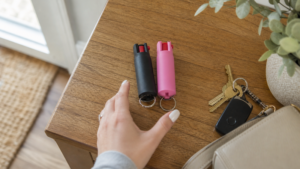
Keychain alarms: These are common but carry a risk: keys are often stored inconsistently, and the alarm can become entangled with other key fobs. If you carry a keychain alarm, it should be the only thing on that ring — or at minimum, positioned at the end of the ring where it is immediately distinguishable by touch.
Are there carry positions that experienced people avoid?
Yes. Several carry positions look reasonable but perform poorly when it matters.
Inside the main bag compartment: Already covered — this is storage, not carry. If you are unzipping and searching, you have lost the window.
Bottom of a jacket pocket with other items: Keys, a phone, chapstick, a receipt — everything that shares a pocket with your alarm degrades your access. By feel alone, in the dark, under stress, you should be able to reach in and retrieve the alarm cleanly. Test this right now, tonight, with whatever you currently carry. If you cannot do it in two seconds without looking, your carry position needs adjustment.
Attached to a bag that is frequently set down: A bag left at your desk, in a restaurant, or across a room means your alarm is not with you. On-body carry eliminates this gap.
The people who carry well are not paranoid. They are precise. They have made a considered decision about a tool, carried it correctly, and built the habits that make it functional. That is the standard worth holding yourself to.
Frequently Asked Questions About Where to Carry a Personal Alarm
What is the fastest-access carry position for a personal alarm?
On-body carry beats bag carry for raw speed. A clip-on alarm worn at the hip or waistband can be grabbed and activated in a single motion with either hand. A lanyard-style pull-pin alarm is even faster in a close-contact situation — the pin activates through the force of pulling away. If you carry in a bag, use an outer pocket dedicated solely to the alarm, nothing else.
Should I carry a personal alarm in my dominant or non-dominant hand?
When you move the alarm to your hand before entering a higher-risk environment, carry it in your dominant hand. That is your faster, stronger, more reliable hand under stress. However, practice accessing it with your non-dominant hand as well. Situations do not always allow you to choose which hand is free. Both hands should know where the alarm is and how to activate it.
Can I carry a personal alarm on an airplane?
Personal alarms are generally permitted through TSA screening, but regulations can change and vary by airline and destination. It is worth reviewing current TSA guidelines and checking with your airline before travel. For more detail on what non-lethal tools are and are not permitted on flights, this breakdown of carrying non-lethal self-defense products on an airplane covers the topic directly. Do not assume — confirm before you fly.
Where should a child carry a personal alarm?
For children, the alarm should be clipped to the outside of a backpack or attached to a zipper pull where it is immediately visible and reachable. It should never be inside the bag. A bright color helps with visual identification for both the child and bystanders. Walk through activation with the child so they know exactly what to do — ownership without practice is incomplete preparation. A personal alarm designed specifically for children will have a simpler, more intuitive activation mechanism.
How do I keep my personal alarm from accidentally going off?
Choose a carry position and pocket where the alarm is not pressed against other objects. Pull-pin alarms should not share a pocket with items that could catch the pin — carry them on a lanyard or dedicated clip. Button-activated alarms usually require a sustained press to trigger, which reduces accidental activation. When in doubt, test the alarm’s activation resistance and choose a carry method that keeps the mechanism protected but still accessible.
Is a keychain personal alarm a good carry option?
A keychain alarm is convenient but carries real trade-offs. Keys are often set down, handed off, or stored inconsistently — and a keychain alarm goes wherever the keys go, not necessarily with you. If you use a keychain alarm, treat it as a secondary layer, not a primary carry. Your primary alarm should be in a position that stays with your body throughout the day regardless of what you do with your keys.
How often should I test my personal alarm to make sure it works?
Test it at least once a month with a brief activation — step outside or somewhere the sound will not alarm anyone unnecessarily, then trigger it for one or two seconds. This confirms the battery or charge is sufficient and that the mechanism still functions properly. If you carry a rechargeable alarm, build charging into a weekly routine the same way you charge your phone. A dead alarm is no alarm at all.
Does carry position change for nighttime versus daytime use?
Your standard carry position should work equally well at any hour — that consistency is the point. However, at night or in lower-visibility environments, move the alarm from its storage position into your hand before entering isolated areas. Darkness does not change where the alarm lives. It changes when you draw it. Having it in hand before you need it eliminates fumbling in the dark entirely.