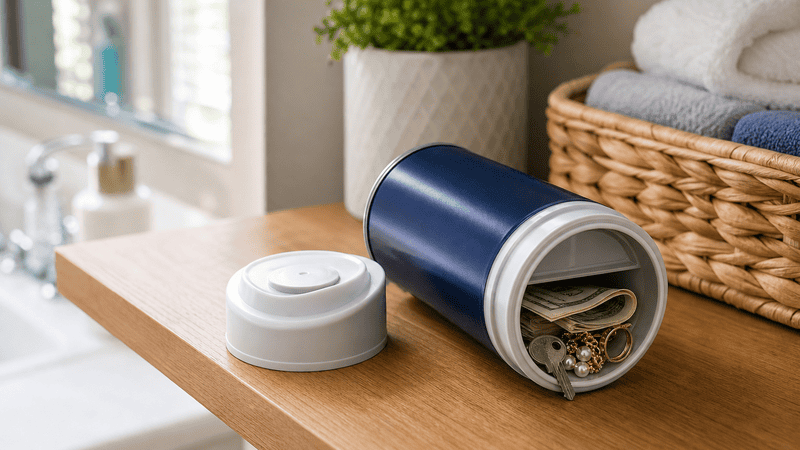
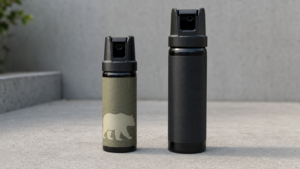
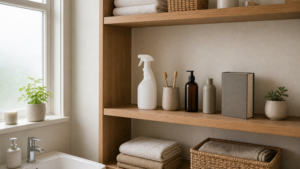
A diversion safe can hold cash, spare keys, jewelry, small prescription medications, backup credit cards, USB drives, a folded emergency document, and small personal protection items like a compact stun gun — anything small enough to fit the compartment and valuable enough that you’d regret losing it. The goal is to keep those items hidden in plain sight, inside an object a burglar is unlikely to grab or open during a fast hit-and-run theft.
Most break-ins last under ten minutes. That’s not a statistic designed to scare you. It’s a fact that changes how you think about home security. A burglar moving fast through your house is not going to unscrew the bottom of a shaving cream can or crack open a realistic-looking soup can. They’re headed for the obvious spots — the master bedroom dresser, the nightstand, the closet shelf. A diversion safe puts your most important small valuables somewhere that doesn’t look like it belongs on a burglar’s checklist.
Knowing what to put in one is just as important as having one. The wrong items reduce its effectiveness. The right ones give you a quiet layer of protection that works every day without requiring any action from you at all.
What kinds of valuables are a good fit for a diversion safe?
The best candidates are small, high-value, and not immediately replaceable. Think about what you’d lose sleep over if it went missing. That’s your starting list.
Cash. Not your grocery budget — your emergency cash. Many financial advisors recommend keeping two to four weeks of basic expenses accessible in physical cash in case of banking disruptions, natural disasters, or power outages where card terminals go down. A diversion safe is a reasonable place to keep that reserve. It’s not in your wallet where it can be pickpocketed, and it’s not in a fireproof lockbox that looks exactly like what it is.
Jewelry. Not the costume pieces — the items with real sentimental or monetary value. An heirloom ring, a gold chain, earrings that belonged to a grandparent. These are exactly the kind of items a burglar targets in the bedroom. Moving them into a diversion safe in a less obvious room changes the equation entirely.
Spare keys. A backup house key or car key is a legitimate item to tuck away — as long as you’re not storing it near a door or window where it becomes an obvious find. A diversion safe on a kitchen shelf or in a bathroom cabinet is a reasonable home for a key you might need someday.
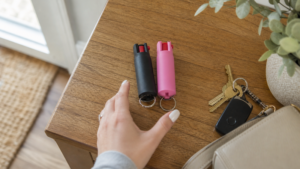
Small personal defense tools. Items like a compact personal alarm or a small stun gun are reasonable additions if they’re legal to possess in your state and you want them accessible but out of reach of children. This is one area where you want to think carefully about placement — more on that in a moment.
Can you store prescription medications in a diversion safe?
Yes, and for many people this is one of the most practical uses. Certain prescription medications are targets — not just for burglars, but for visitors, guests, and in some cases, family members. Keeping them in a medicine cabinet is essentially announcing their location to anyone who uses your bathroom.
A diversion safe in the bathroom — disguised as a hairspray can or a cleaning product — can hold a small supply of medication that you want kept private and protected. This applies to pain medications, sleep aids, ADHD medications, and anything else that has value beyond its medical use or that you simply don’t want accessible to others.
Two practical notes: First, don’t store medications in extreme heat or humidity if possible. Most diversion safes offer no climate control, so a bathroom with high shower steam may not be ideal for long-term medication storage. Second, keep your primary supply separate and make sure you can reach what you need in an emergency without fumbling through a concealment container.
What should you not store in a diversion safe?
A diversion safe is a concealment tool, not a security vault. The distinction matters. Here’s what doesn’t belong inside one.
Irreplaceable legal documents in their only copy. Original birth certificates, social security cards, property deeds, wills — these need to be in a fireproof and waterproof container, ideally in a bank safe deposit box or a quality fireproof home safe. A diversion safe offers zero protection from fire or flood. Copies of documents are fine. Originals are a different matter.
Large amounts of cash. If you’re holding more than a few hundred dollars, reconsider. Diversion safes typically have small compartments and no structural protection. They work by hiding, not resisting. For larger cash holdings, a quality bolted safe is the right tool.
Firearms. This should be obvious, but it bears saying clearly. A firearm stored in a diversion safe is not safely stored. It offers no trigger lock, no biometric delay, and no real resistance if someone finds it and forces it open. Firearms require purpose-built storage — a gun safe or lockbox rated for that specific use.
Items you need immediate daily access to. If you’re opening and closing the safe four times a day, you’ll break the concealment habit and you’ll also risk someone noticing the pattern. Diversion safes work best for items you access occasionally, not constantly.
Where in your home should you place a diversion safe?
Placement is part of the security system. A diversion safe in the right location disappears into the environment. In the wrong location, it sticks out or gets found by accident.
The kitchen is an underrated location. Burglars rarely spend time in the kitchen — there’s usually nothing obvious to take there. A diversion safe disguised as a canned good sitting on a pantry shelf blends in naturally. A fake cleaning product under the kitchen sink is another solid option.
The bathroom offers natural cover for hairspray cans, shaving cream containers, and personal care product lookalikes. Most people have several of these products already on their shelves, so one more doesn’t register.
The master bedroom is where most burglars head first — so it’s actually one of the riskier places to keep your diversion safe if you’re facing a targeted or experienced thief. That said, a well-placed safe disguised as a book on a bookshelf or a product on a cluttered surface can still work here. The key word is cluttered — a diversion safe sitting alone on a bare shelf draws more attention than one surrounded by similar-looking objects.
Keep it away from entry points. A diversion safe near the front door is accessible to anyone who enters. That includes service workers, repair technicians, and anyone else who has a legitimate reason to be near that space briefly. Deeper in the home is better.
For more on how effective these tools actually are against real burglary scenarios, read are diversion safes effective against burglars — it covers the research on what thieves actually do during a break-in.
How does a diversion safe work alongside other home security layers?
A diversion safe is one layer. By itself, it protects what’s inside it. Combined with other tools, it becomes part of a layered approach that makes your home a much harder target overall.
A hidden camera covering the entry area gives you documentation and deterrence. If you’re curious about runtime and detection, how long a hidden camera can record without being detected is worth understanding before you choose one.
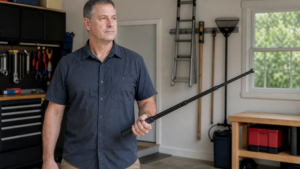
Personal alarms and stun guns stored accessibly — not locked away in a place you can’t reach under stress — add a response capability to your home protection. The diversion safe handles passive protection of your valuables. Active tools handle direct threats. Neither replaces the other.
A quality door alarm or window sensor creates an early warning layer. You don’t need a professionally monitored system to benefit from simple contact alarms on your most vulnerable entry points. A loud alarm on a ground-floor window costs very little and changes what a burglar encounters the moment they try to enter quietly.
Think of it as a checklist: concealment of valuables, early warning if someone enters, a personal response option if the situation escalates. A diversion safe handles the first item on that list reliably and quietly, every day, without batteries or subscriptions.
Can a diversion safe hold a stun gun or personal alarm?
A compact stun gun or personal alarm can fit in many diversion safe compartments, depending on the size of the unit. Smaller models like a lipstick stun gun or a keychain alarm fit easily. Larger units may not. Check the interior dimensions before you plan on storing a specific device.
More importantly, think through the access question. A self-defense tool stored in a diversion safe is not immediately accessible in a fast-moving threat situation. If you’re keeping it there for secure storage when not in use — overnight, when children are home, when you’re not carrying it — that’s a reasonable use. If you think you might need to reach it quickly, a different storage location makes more sense.
Stun guns are legal in most states, though laws vary on carrying them outside the home. If you’re building out your home security kit, you can explore reliable stun gun options alongside your diversion safe setup.
Frequently Asked Questions About What to Store in a Diversion Safe
How much cash can you realistically fit in a diversion safe?
Most diversion safes have a compartment roughly the size of a deck of cards to a small paperback book. You can typically fit $200–$500 in mixed bills without overfilling the space. Folded tightly, larger amounts are possible, but if you’re storing significant cash, a bolted fireproof safe offers better structural protection. Diversion safes are ideal for emergency reserves, not large holdings.
Are diversion safes fireproof or waterproof?
No. Diversion safes are concealment tools, not structural security containers. They offer zero protection from fire, flood, or forced entry by someone who knows what they’re looking for. Do not store original irreplaceable documents in one. Use a rated fireproof safe or a bank safe deposit box for documents and items that cannot be replaced if destroyed.
Can children get into a diversion safe?
A child who knows what the object is and how it opens can access it. Diversion safes have no combination locks or biometric controls — the security comes from concealment, not mechanical resistance. If you have curious children in the home, choose a diversion safe style that a child is unlikely to recognize or interact with, and place it out of reach or in a space children don’t access routinely.
What’s the best diversion safe style for a bedroom?
A book safe on a bookshelf full of books, or a container disguised as an everyday product that fits naturally in your bedroom environment. The key is that it blends with items already around it. A single obviously out-of-place object draws attention. Surrounded by similar-looking things, it disappears. Avoid placing it in a location that is always the first place someone looks — top drawer of a nightstand, for example.
Is it legal to use a diversion safe?
Yes. Owning and using a diversion safe is legal throughout the United States. There are no federal restrictions on concealing personal valuables in everyday objects within your own home. What you store inside may have its own legal considerations — certain medications require prescriptions, and self-defense tools are subject to state and local laws — but the safe itself is not a regulated item.
Can I use a diversion safe in a hotel room when I travel?
Yes, and this is an underused application. A travel-friendly diversion safe — one small enough to pack and that looks like a common toiletry item — gives you a place to store cash, a backup card, and a spare key card in a hotel room. Housekeeping and opportunistic theft from hotel rooms are real risks. A realistic-looking personal care product sitting on the bathroom counter is unlikely to be touched.
How do I choose the right size diversion safe for what I want to store?
List the items you intend to store and note the dimensions of the largest one. Then find a diversion safe with an interior compartment that comfortably fits that item with room for the others. Most product listings include interior dimensions. Don’t just buy based on the exterior appearance — verify the compartment size matches your actual storage needs before purchasing.
Does a diversion safe replace a real safe?
No. A diversion safe and a quality lockbox or fireproof safe serve different purposes. A diversion safe excels at hiding items in plain sight during everyday situations — including burglaries where time is short. A real safe provides structural resistance, fire protection, and lock security. The strongest home setup uses both: a diversion safe for items you want hidden but accessible, and a proper safe for documents, larger cash, and items that need real physical protection.
A diversion safe is not a complicated piece of equipment. You fill it, you place it, and then it works quietly on its own. But like any tool, it works best when you’re deliberate about what goes in it and where it lives in your home. Keep the right items inside, pair it with a few other basic security layers, and it earns its place in your setup without asking anything more of you. I don’t want you to ever need it. But the day you do, you’ll be glad it was there and not on a shelf you picked without thinking it through.
If you’re building out a full home security approach, explore the full range of diversion safe options and home defense tools available at Stun Guns — practical gear, no pressure, just what works.