Most attacks near vehicles happen during the walk to or from the car, not in the car itself — attackers rely on distraction and delay. You reduce risk by parking under lights, having your keys ready before you leave the building, scanning between vehicles as you walk, and carrying a reliable tool you’ve actually practiced using. None of this requires living in fear. It requires a few consistent habits.
Why are parking lots more dangerous than people think?
Parking lots feel safe because they’re familiar. You’ve walked to your car a thousand times without incident. That’s exactly why they’re risky — familiarity breeds autopilot, and autopilot is what attackers count on.
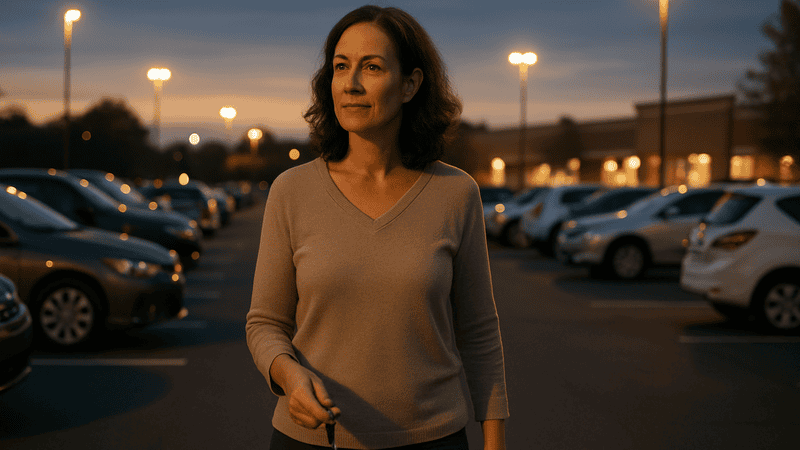
I spent years training people to stay alert in unpredictable environments. The lesson that mattered most wasn’t about danger — it was about attention. A parking lot at night has poor lighting, blind spots between vehicles, and people distracted by bags, phones, or tired kids. That combination is why so many incidents happen there instead of in some dark alley people imagine. It’s not the location that’s dangerous. It’s the distraction.
You don’t need to be suspicious of every shadow. You need a routine that keeps your attention where it belongs — on your surroundings — without turning every errand into a stressful event.
How do I know if a parking lot is actually safe to walk through?
You can judge a lot’s safety in about ten seconds, before you ever get out of your car. Look for three things: lighting, activity, and sightlines.
- Lighting — Are the light poles working? Dead lights near your parking spot are a signal to move your car, not push your luck.
- Activity — Are there other people around, or is it empty and still? Isolation is what attackers look for.
- Sightlines — Can you see clearly between the rows, or are there vans and oversized vehicles blocking your view? Blind spots are where problems start.
If a lot fails on all three, park somewhere else, even if it costs you an extra minute of walking. That minute is the cheapest insurance you’ll ever buy.
What should I do before I even leave the store or building?
Have your keys in your hand before you walk out the door. This single habit eliminates the most vulnerable moment of the whole trip — the fumbling, distracted search through a bag or pocket while standing next to your car.
Take thirty seconds to glance around before you step outside. Notice who’s near the entrance, who’s walking the same direction you are, and whether anyone seems to be waiting without a clear reason. This isn’t paranoia. It’s the same situational awareness a good driver uses at an intersection — quick, quiet, automatic once you build the habit.
If you’re carrying a personal alarm or a compact self-defense device, this is the moment to have it accessible — not buried at the bottom of a bag. A tool you can’t reach in three seconds isn’t doing its job.
How should I walk through the lot to stay safer?
Walk with purpose, down the main lanes when possible, rather than cutting between parked cars. The space between vehicles is where visibility drops and reaction time shrinks. Staying in open lanes keeps you visible to other people and gives you room to react if something feels wrong.
Trust that instinct if it shows up. I’ve talked to a lot of people over the years who said some version of “I felt something was off, but I told myself I was overreacting.” That hesitation costs time. If a car parked next to yours has someone sitting in it who wasn’t there before, or if you feel like you’re being watched, it’s fine to walk back toward the building, call someone, or ask an employee to walk you out. None of that is dramatic. It’s just smart.
Check your back seat and the space around your car before you get in — a two-second habit that closes off the one place people sometimes get caught off guard.
What should I actually be carrying for this situation?
Carry something you understand and have practiced with — that matters more than which brand it is. A compact pepper spray that fits on a keychain gives you distance and time. A discreet stun gun gives you a contact option if someone gets close. A loud personal alarm draws attention fast in a lot where other shoppers are nearby.
The Streetwise and ZAP lines make compact stun devices that fit easily in a coat pocket or a purse, and brands like Mace and Wildfire make keychain pepper sprays built for exactly this situation — quick access, no fumbling.
Whatever you choose, the honest truth is this: the tool only works if you’ve practiced with it. Pull it out at home. Learn the safety. Know which direction it fires or activates. Confidence comes from familiarity, not from owning something and hoping you never have to think about it again. If you want a deeper walkthrough on getting pepper spray right, we cover it step by step in How to Use Pepper Spray Correctly: 6 Things Most People Never Practice.
What’s the best way to prepare without living in fear of parking lots?
Preparation is what allows you to stop worrying, not the other way around. People who carry a plan — where to park, how to walk, what to carry — move through parking lots with less anxiety than people who have no plan at all and just hope for the best.
I’ve said this to a lot of neighbors and family members over the years: I don’t want you to need any of this. But I want you to have it if you do. That’s not a scare tactic. It’s the same reason you keep a spare tire in your trunk. You’re not expecting a flat every day. You’re just not willing to be stranded if one happens.
If you want a broader look at which tools make sense for different situations — not just parking lots — our post on The Most Effective Self Defense Weapons for Women (Ranked by Real-World Use) breaks it down by real-world scenario, not marketing hype.
Frequently Asked Questions About Staying Safe in Parking Lots
Why do most attacks happen in parking lots instead of somewhere more isolated?
Parking lots combine three things attackers look for: distraction, predictable movement, and brief windows where victims are alone. People walk to their cars while checking phones or carrying bags, making them an easy target compared to more alert environments. It’s not that parking lots are inherently more dangerous than alleys — they’re simply more common and more predictable.
Is it better to park close to the store or under a light?
A well-lit spot farther from the entrance is generally safer than a dark spot close to the door. Lighting affects visibility for you and for anyone watching the lot, including security cameras and other shoppers. Choose visibility over convenience whenever the two conflict.
What’s the single most important habit for parking lot safety?
Having your keys and any self-defense tool in hand before you leave the building. This removes the most vulnerable moment — searching through a bag while standing next to your vehicle. It takes no extra time once it becomes routine.
Should I call someone while walking to my car at night?
Yes, if it helps you stay alert and feel supported. A phone call or video chat with someone while you walk can deter a potential attacker and gives you an immediate way to get help if something feels wrong. It should support your awareness, not replace it — avoid getting so absorbed in the call that you stop scanning your surroundings.
What should I do if I notice someone following me through a lot?
Change direction toward a populated, well-lit area — back toward the store entrance, a security booth, or a group of people. Trust the instinct immediately rather than second-guessing it. If you have a personal alarm or pepper spray accessible, hold it ready as you move. Most situations resolve simply by removing the isolation the person was counting on.
Is a stun gun or pepper spray better for parking lot safety?
Pepper spray works well at a distance and is effective before someone reaches you, which fits the open layout of a parking lot. A stun gun is a strong option if someone gets close, such as near your car door. Many people carry both — a small pepper spray on their keychain and a compact stun device in a coat pocket or bag.
Do personal alarms actually help in a parking lot?
Yes. A loud personal alarm, often 120–130 decibels, draws immediate attention from anyone nearby, including other shoppers and store employees. It doesn’t require physical contact or aim, which makes it useful for people who want a simple, low-effort option to carry alongside other tools.
How do I build these habits without it becoming stressful every time I park?
Treat it like checking your mirrors before backing out — a quick, automatic routine rather than a moment of worry. Keys in hand, a glance around, walking in open lanes — these become second nature within a few weeks of consistent practice. The goal is calm awareness, not constant alertness.
A habit worth building
None of this requires you to change who you are or how you move through your day. It just requires a few small habits, repeated consistently, until they become as automatic as locking your front door. That’s the whole point — not fear, but readiness.
If you want to build out a setup that fits your routine, take a look at our full range of stun guns and pepper sprays, and find something you’ll actually carry — because the best tool is always the one you have with you.