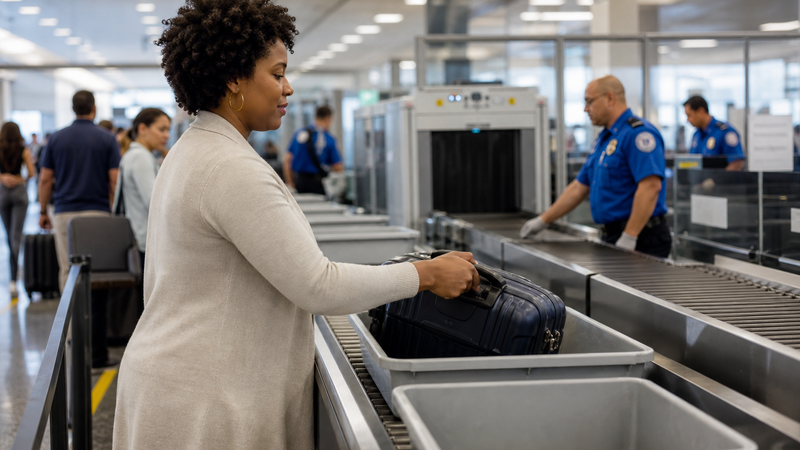
Most self defense keychains cannot be taken on a plane in your carry-on bag. The TSA prohibits any item with a pointed tip, weighted striking surface, or design intended to cause physical harm — and most self defense keychains meet that description. A few exceptions exist, but they are narrow. Knowing the difference before you reach the checkpoint could save you from losing your gear and missing your flight.
This matters more than most travelers realize. Airport security confiscates thousands of personal items every week. Many of those people had no idea what they were carrying was prohibited. If you rely on a self defense keychain as part of your daily safety routine, traveling with one requires a clear plan — not an assumption.
What does the TSA actually say about self defense keychains?
The Transportation Security Administration evaluates items based on their potential to cause harm, not just their label. A keychain shaped like a cat with two pointed ear holes — commonly called a “cat keychain” or kubotan-style tool — is explicitly prohibited in carry-on baggage. The TSA’s prohibited items list includes kubotans, weighted striking tools, and any pointed items that could be used as a weapon.
The critical word here is “design.” The TSA does not need proof that you intended to use something as a weapon. If the item was designed to be used as one — or reasonably appears to be — it doesn’t go through the checkpoint in a carry-on bag. That applies whether the tool is made of steel, aluminum, or hard plastic.
Checked baggage is a different story. Most non-explosive self defense tools can be packed in a checked bag. That includes many keychain-style tools. But once you land and leave the airport, local laws take over. Certain states restrict or prohibit specific types of self defense tools regardless of how you traveled with them. Check local regulations before you pack anything for a trip.
Which types of self defense keychains are banned from carry-on bags?
The list of prohibited keychain types is longer than most people expect. These categories are consistently flagged and confiscated at TSA checkpoints:
- Cat-ear keychains — Any hard-material keychain with two pointed protrusions designed to fit between your fingers. These are explicitly named on the TSA prohibited list.
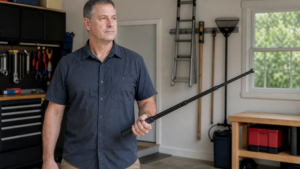
- Kubotans and palm sticks — Short, rigid striking tools designed to concentrate force. Material doesn’t matter. Intent of design does.
- Weighted self defense rings — Metal rings designed to reinforce a punch or strike. These fall under impact weapons.
- Pointed keychain tools — Any rigid keychain with a sharpened or tapered point intended for striking. A pointed keychain self defense tool is a smart choice for daily carry on the ground, but it will not clear TSA.
- Keychain knives and blades — Any blade, regardless of length, is prohibited in carry-on bags.
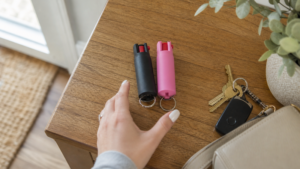
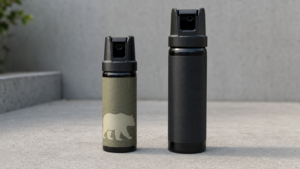
- Pepper spray and defense spray — All aerosol sprays, including defense spray for self defense, are banned from carry-on bags. Pepper spray under 4 fl oz with a safety mechanism may be packed in checked baggage only.
- Stun gun keychains — Any device that delivers an electric shock is prohibited in both carry-on and checked baggage on commercial flights.
If your keychain falls into any of these categories, it stays home or goes in your checked bag — with the understanding that checked-bag rules still apply and vary by item.
Is there any self defense keychain that is allowed through TSA security?
Very few options make it through. A plain, unsharpened tactical pen without a striking head may pass — but only if the officer reviewing it determines it is primarily a writing instrument. There is no guarantee. A personal alarm attached to a keychain is generally permitted in carry-on bags, since it causes no physical harm — it only produces sound. That’s a meaningful option worth having.
A standard keychain with no modifications — no points, no weights, no blades — is fine. But a keychain that has been specifically designed or marketed for self defense purposes will likely be flagged regardless of its construction, because TSA officers are trained to identify intent of design.
If personal safety while traveling is your concern, the most reliable carry-on option is a loud personal alarm. A 130dB personal alarm on your keychain is legal to fly with, legal in all 50 states, and can draw immediate attention in any airport, hotel, or parking garage. It won’t stop a threat the way a physical tool might, but it creates noise and attention — two things most bad actors want to avoid.
What happens if TSA finds a prohibited self defense keychain in your bag?
The officer will stop you. Your bag will be pulled aside for inspection. You will be given the option to surrender the item or return to check it into your luggage — if time allows before your flight. If you don’t have time, you leave the item behind. There is no fine for an honest mistake on most prohibited items, but the item is gone.
The more serious concern is this: if the officer determines the item looks like a weapon and your intent is unclear, you may be referred to law enforcement for further screening. That is rare, but it does happen. The safest approach is to know what you have, declare it when appropriate, and not rely on hoping something slips through unnoticed.
TSA officers have discretion. Two travelers can go through the same checkpoint on the same day with the same item and get two different results. That inconsistency is not a loophole. It’s a reason to avoid the situation entirely.
How should you protect yourself during travel if your self defense tools are restricted?
Travel safety does not stop because your keychain tools are at home. The window between landing, collecting your bags, and reaching your destination is often the most vulnerable stretch of any trip. Here is a practical approach:
- Fly with a personal alarm in your carry-on. It’s legal, effective at drawing attention, and requires no training to use. Keep it accessible — not buried in your bag.
- Ship your tools ahead. If you’re staying somewhere for several days, ship your preferred self defense keychain to your destination. Check local laws first.
- Pack permitted tools in checked baggage. Many non-electric keychain tools, including certain self defense keychain sets, can travel in checked bags. Confirm with TSA’s “What Can I Bring?” tool before you fly.
- Know your surroundings. Awareness is still your first line of defense. Unfamiliar cities, late-night rideshares, hotel parking garages — these deserve your attention regardless of what tools you have.
- Restock at your destination. Many self defense products can be purchased locally or online with local delivery. Plan ahead rather than trying to improvise at the airport.
For more on what non-lethal tools you can and cannot bring on a commercial flight, I covered this in more detail in a related post: can you carry non-lethal self defense products on an airplane?
What self defense keychain options are best for everyday carry when you’re not flying?
When you’re not navigating TSA checkpoints, your options open up significantly. A well-chosen keychain tool that you carry every day — one that fits your hand, your lifestyle, and your state’s laws — is a smart investment in your personal safety.
A lightweight self defense keychain is a good starting point for most people. It rides on your existing keyring without adding bulk, and it’s ready immediately when you reach your car, your front door, or any situation where your hands are already occupied with keys.
For those who want a more complete everyday carry system, a self defense keychain ring integrates multiple tools in one compact form. The idea is simple: everything you need is on the same ring you already carry. There is no separate bag, no extra step, no searching under pressure.
Whatever you choose, practice with it. A tool you’ve never handled under stress is not a reliable tool. Know how it deploys, how it fits in your grip, and what it is actually designed to do. That knowledge matters more than the tool itself.
Frequently Asked Questions About Self Defense Keychains on Planes
Can I put a self defense keychain in my checked luggage?
Most non-electric self defense keychain tools — including cat keychains, kubotans, and palm sticks — can be packed in checked baggage. Pepper spray under 4 fl oz with a safety mechanism is also allowed in checked bags only. Electric tools like stun guns are prohibited in both carry-on and checked baggage on commercial flights. Always verify with the TSA “What Can I Bring?” database before packing.
Will TSA confiscate my self defense keychain?
Yes, if it appears to be a striking, stabbing, or impact weapon, TSA officers will confiscate it from your carry-on. You may be offered the chance to check it if time allows, but if your flight is boarding, the item is gone. There’s generally no fine for prohibited personal items, but you lose the tool. Knowing what you have before you reach the checkpoint is the only reliable protection.
Can I fly with pepper spray on a keychain?
No. Pepper spray, mace, and all similar aerosol defense sprays are banned from carry-on luggage entirely. A single container of pepper spray up to 4 fl oz with a safety mechanism may be packed in checked baggage. No aerosol defense spray is permitted in the passenger cabin under any circumstances. This applies regardless of keychain attachment or container size below the limit.
Are personal alarms allowed on airplanes?
Yes. Personal alarms that emit a loud sound are permitted in carry-on baggage. They contain no blades, no chemicals, and no electrical shock components — so they don’t trigger prohibited item classifications. A personal alarm on your keychain is one of the few self defense tools you can reliably bring through any TSA checkpoint. It’s a smart option for travel safety.
Do TSA rules on self defense keychains vary by airport or officer?
The rules are federal and uniform across all U.S. airports, but officer discretion does exist. An item in a gray area may pass one checkpoint and be flagged at another. That inconsistency is not a loophole to count on — it’s a reason to keep prohibited items out of your carry-on entirely. If there’s any doubt about an item, pack it in checked baggage or leave it home.
What self defense tools can I legally carry after I land?
Once you leave the airport, state and local law governs what you can carry. Most states allow keychain self defense tools, personal alarms, and pepper spray, but restrictions vary widely. Some states limit blade length, spike-style tools, or certain impact weapons. Research the laws of your destination state before you travel, particularly if you plan to carry anything from your checked baggage after landing.
Can I bring a stun gun keychain on a plane?
No. The TSA prohibits all stun guns and electroshock devices in both carry-on and checked baggage on commercial flights. This applies to stun gun keychains, compact stun devices, and any tool that delivers an electric shock. This is a firm prohibition with no exceptions for small size or low voltage. If you travel with a stun device, it needs to stay home or be shipped separately to your destination.
What is the safest self defense tool to carry while traveling by air?
A personal alarm is the most travel-compatible self defense tool available. It passes TSA screening, is legal in all 50 states, requires no training, and works immediately. It won’t stop a physical threat by itself, but it draws attention fast — which is often enough to change the outcome of a dangerous situation. Pair it with situational awareness and you have a practical, legal safety plan for any trip.
Traveling pulls you out of your normal environment and your normal routine. Your usual tools may not make the trip with you. That’s not a reason to feel unprotected — it’s a reason to plan before you pack. Know what you can bring, know what stays home, and know what your options are when you land.
My underlying principle has always been the same: I don’t want you to need any of this. But I want you to have a plan if you do. Browse our full selection of self defense keychain options for everyday carry — and travel with the knowledge of exactly what’s permitted and what isn’t.