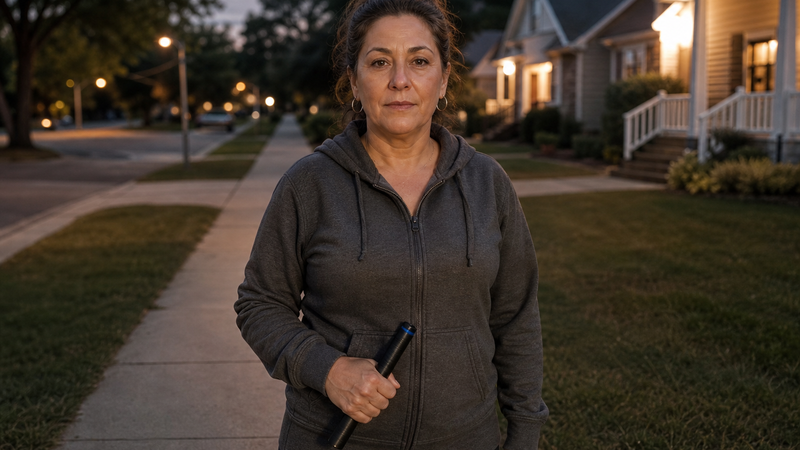
Yes, stun batons are effective against large attackers. Electrical current disrupts neuromuscular function — it doesn’t negotiate with body mass. A quality stun baton delivering sufficient voltage will cause involuntary muscle contractions and temporary disorientation in an attacker regardless of their size or weight. Extended reach, sustained contact, and proper voltage are the factors that matter most.
I spent over two decades in the Army, and I came home with one strong conviction about personal safety: the people least likely to start a fight are often the ones who need protection the most. A smaller person facing a larger, stronger attacker doesn’t need luck — they need a tool that neutralizes the size advantage. A stun baton does exactly that, when you understand how it works and what to look for. Let me walk you through it honestly.
How does a stun baton actually work on a large person?
Stun devices work by delivering a high-voltage, low-amperage electrical charge that interferes with the body’s neuromuscular system. When the probes make contact with skin or clothing and the charge is sustained, the muscles in that area experience rapid, involuntary contractions. This causes pain, loss of motor control, and temporary disorientation.
Body size does not change how the nervous system responds to electrical disruption. A 280-pound man has the same basic neuromuscular biology as a 140-pound man. The charge doesn’t need to overpower physical strength — it bypasses strength entirely and works at the neurological level. That’s the key distinction most people miss.
What body mass can affect is how quickly the person recovers and whether the charge penetrates through thick clothing. A larger attacker with more body fat may have a slightly higher tolerance for pain, but the involuntary muscle response is not a pain tolerance issue — it’s a physiological one. Even highly trained individuals cannot resist sustained electrical disruption through willpower alone.
The practical takeaway: stun batons work on large attackers when you make solid contact, maintain that contact for several seconds, and use a device with adequate output. Size of the attacker is a secondary concern. Quality of the tool and quality of your contact are the primary ones.
What makes a stun baton more effective than a standard stun gun for larger threats?
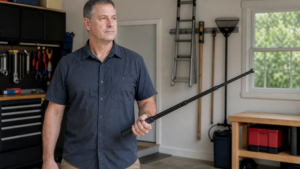
The reach advantage is real and it matters. A standard handheld stun gun typically puts your hand within inches of an attacker when you deploy it. That’s a close quarters situation with a larger opponent. A stun baton extends your effective range — typically 12 to 24 inches — which lets you make contact before they can close the distance to you completely.
That distance matters more against larger attackers for a specific reason: momentum. A bigger person in motion is harder to stop. Getting a stun baton on them while they’re still an arm’s length away gives the electrical disruption time to take effect before they’re on top of you. With a standard stun gun, that window is much narrower.
Stun batons also typically carry higher voltage ratings than compact units, though voltage alone doesn’t tell the whole story. The design of the electrode probes, the spacing between them, and the duration of contact all affect how effectively the charge transfers through clothing and into the body. A baton built with wide-spaced probes and a solid connection between the unit and your hand gives you better performance across the board.
For people who carry regularly or who work in environments with elevated risk, I often point toward a stun gun with a holster and integrated flashlight as a practical everyday option. But for home defense or situations where extended reach is a priority, a stun baton is in a different category. You can read more about the range of options available in our post on the longest stun batons available for purchase.
Does voltage matter when choosing a stun baton for self-defense?
Voltage matters, but it’s one factor among several — not the only one you should look at. Marketing numbers on stun devices can be misleading. A device rated at a very high voltage but with poorly spaced probes or weak amperage delivery may perform worse in real conditions than a lower-rated unit built with better engineering.
What you should actually evaluate: probe spacing, amperage, build quality, and how the device fits your hand. Probe spacing determines whether the electrical arc can bridge across muscle groups effectively. Wider spacing generally means broader disruption. Amperage is what actually does the work at the physiological level — voltage is the pressure, amperage is the current.
Build quality matters because a stun baton is a tool you may need to use under stress. Cheap construction means components that fail when you need them most. Brands like Streetwise, ZAP, and Stun Bat have established track records in this space. When I look at a stun baton, I want to see solid probe construction, a reliable power delivery system, and a grip that stays secure even if your hands are shaking.
Don’t get pulled in by maximum voltage claims alone. A device that consistently delivers a solid, sustained charge through reasonable clothing is worth more than one with an impressive spec sheet and inconsistent real-world performance.
Can a stun baton stop a large attacker who is on drugs or in an agitated state?
This is a fair question, and I’ll give you a straight answer: performance against someone under the influence of certain substances is less predictable. Pain tolerance can be significantly elevated. But again — involuntary muscle contractions are not about pain tolerance. They’re about electrical disruption of the neuromuscular system.
What changes with a highly agitated or chemically impaired attacker is the pain compliance component. Stun devices work through a combination of pain, disorientation, and motor disruption. If someone’s pain response is blunted, you may need more sustained contact to produce the motor disruption component. That’s where a stun baton’s ability to maintain contact is an asset over a short contact device.
I’ll also tell you this: no non-lethal device has a 100% stop rate in every situation. That’s true of pepper spray, personal alarms, and even TASER devices used by law enforcement. The goal of a non-lethal tool is to create an opportunity to escape — not to guarantee an attacker is completely incapacitated. A few seconds of involuntary muscle disruption buys you time to move. That’s the mission.
If you want to understand how electrical deterrence functions even before contact is made, our post on whether a stun gun can be used as a deterrent without making contact covers that dynamic in detail.
Who should consider a stun baton specifically?
A stun baton is not the right tool for everyone. If you’re carrying something daily in a bag or on your person, a compact option like a compact rechargeable stun gun is probably more practical. But there are specific situations where a stun baton’s extended reach and higher output make it the better choice.
People who work late shifts in isolated environments — warehouse workers, security personnel, hospital staff walking to their cars — benefit from a baton’s reach advantage. Seniors or individuals with limited mobility who may not be able to engage in close-quarters defense get meaningful distance with a baton. And people who want a home defense option that doesn’t require close physical proximity to a threat will find a stun baton fits that role well.
For seniors who also want the utility of a mobility aid, a walking cane stun gun combines both functions in a natural, low-profile form factor. It’s a dignified option that doesn’t announce itself as a defense tool, and it keeps the reach advantage built into something you’re already carrying.
The common thread among good candidates for a stun baton is this: they anticipate situations where distance from a threat is more important than concealment of the device. If that describes your situation, a baton makes sense.
How should you train with a stun baton before you need it?
Familiarization is the single most important thing you can do with any self-defense tool. The stun baton you’ve never practiced drawing and deploying is far less useful than one you’ve handled enough times to operate without thinking. Under stress, your fine motor skills degrade. You need gross motor memory.
Practice the draw from wherever you store the baton — beside the bed, by the door, in a bag. Practice the grip. Practice activating it without looking down at the controls. You don’t need a training partner or a special course. You need repetition with your actual device in realistic conditions.
Know your safety switch. Know which end has the probes. Know whether your unit has a disable pin or wrist strap, and practice using it. These are five minutes of your time, repeated a handful of times, that can make the difference between a tool that serves you and one that doesn’t.
If you’re new to stun devices and want a broader understanding of how they function in real self-defense scenarios, I’d recommend reading our post on whether stun guns are effective for self-defense — it covers the fundamentals clearly.
Frequently Asked Questions About Stun Batons and Large Attackers
Will a stun baton work through thick clothing?
A stun baton can work through moderate clothing layers — denim, a light jacket, most everyday fabrics. Very thick padding, heavy leather, or dense insulated outerwear will reduce effectiveness. This is why wide-spaced, well-designed probes matter. They improve the likelihood of effective charge transfer even when clothing is a factor. Direct skin contact always produces the most reliable result.
How long do I need to hold the stun baton on an attacker for it to be effective?
General guidance is one to three seconds of sustained contact for noticeable effect, and three to five seconds for strong motor disruption. Longer contact increases the effect. In a real situation, maintain contact as long as it’s safe to do so, then use the opportunity to move away from the threat. Do not hold contact indefinitely — your goal is an escape window, not prolonged engagement.
Is a stun baton legal to carry in all states?
Stun baton laws vary by state, and in some cases by city or county. Most U.S. states permit civilian ownership and carry of stun devices, but some restrict them or require permits. A few locations prohibit them entirely. I don’t give specific legal advice here — check your state’s current statutes and local ordinances before purchasing. Stun-guns.com ships nationally to locations where these products are legal.
Can I use a stun baton for home defense?
Yes, and it’s a practical home defense option. A stun baton’s extended reach means you don’t have to be within arm’s length of an intruder to deploy it effectively. It’s a non-lethal option that doesn’t carry the legal and psychological weight of a firearm, and it’s effective even in a confined space like a hallway. Keep it charged and accessible — location and readiness determine usefulness.
How often should I charge a stun baton?
Most rechargeable stun batons maintain a charge well over time with minimal use. A practical habit is to charge it once a month if you haven’t used it. Many units have an indicator light that shows charge status. Don’t let it sit uncharged for months — battery degradation reduces effectiveness. Treat it like your phone: keep it charged, and it’s ready when you need it.
What’s the difference between a stun baton and a TASER?
A stun baton requires direct physical contact with the target — you must touch the probes to the attacker’s body or clothing. TASER devices fire barbed probes on wires that deliver an electrical charge from a distance, typically up to 15 feet. TASER devices are significantly more expensive and typically single-use without a reload cartridge. Stun batons are reusable, require no cartridge, and are considerably more affordable for most civilian buyers.
Can a stun baton be used by someone with limited hand strength?
Yes, most stun batons are designed with a straightforward grip and simple activation. The key is choosing one with a comfortable handle size and an easy-to-operate safety and activation mechanism. Seniors or individuals with arthritis or limited grip strength should handle a unit before purchasing if possible, or check product specifications for grip ergonomics. A device you can operate reliably is always better than one with higher specs you can’t handle effectively.
Does making the crackling sound actually deter an attacker?
Often, yes. The visible arc and audible crack of a stun device activating has a documented deterrent effect on many potential attackers. It communicates that you are armed and willing to use the device. Some situations are defused before contact is ever made. That said, deterrence is not guaranteed — someone under the influence or in a highly agitated state may not respond to visual or auditory cues. Be prepared to use the device, not just display it.
I don’t want you to ever need a stun baton. That’s the honest truth. But I’ve seen enough over the years to know that preparation isn’t paranoia — it’s respect for the reality that threats don’t always announce themselves in advance. A quality stun baton, properly understood and regularly maintained, gives you a reliable non-lethal option against a larger attacker without requiring physical strength, extensive training, or a willingness to escalate beyond what the situation demands.
If you’re ready to look at options, browse the full selection at Stun Guns and find the right tool for your situation. If you have questions about a specific product or what makes sense for your circumstances, the information is there to help you decide — no pressure, just honest guidance.