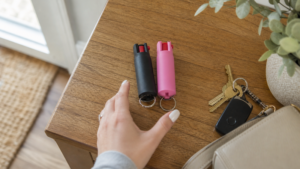
To stop pepper spray burn on skin, flush the affected area immediately with large amounts of cool running water for at least 15 minutes, keep your eyes open if they are affected, and avoid rubbing at all costs. Soap and water helps remove the oily capsaicin compound. Whole milk or a diluted dish soap solution can cut through the oil more effectively than water alone. Time and air exposure also reduce symptoms significantly.
Here is what most first-aid guides won’t tell you: water alone is fighting a losing battle. Pepper spray’s active compound — capsaicin — is an oil. Pouring water on an oil-based irritant does not dissolve it. It spreads it. Understanding that one fact changes your entire approach to decontamination. If you have ever splashed water on your face after a pepper spray exposure and felt it get worse before it got better, now you know why.
Most people reach for what is nearby. That reaction is understandable. But if you know in advance what actually works — and what backfires — you recover faster, suffer less, and make smarter decisions in the moment. Let’s take a closer look at what the chemistry of pepper spray actually demands from you.
Why does pepper spray burn skin, and how long does it last?
Pepper spray contains oleoresin capsicum, commonly abbreviated as OC. It is derived from hot peppers and causes an intense inflammatory response when it contacts skin, eyes, or mucous membranes. The burning sensation comes from capsaicin binding to pain receptors — specifically TRPV1 receptors — which your nervous system interprets as heat. Your skin is not actually on fire. But your nervous system genuinely cannot tell the difference in the moment.
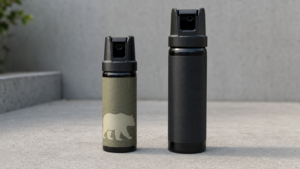
On skin, the burn typically lasts between 30 minutes and two hours depending on concentration, how much contact occurred, and how quickly decontamination begins. Higher-concentration formulas like those used in 4 oz pepper spray canisters designed for serious personal protection carry a higher OC percentage, which means longer burn duration if you get it on you. Consumer-grade products are typically lower concentration, but still capable of significant discomfort.
Skin on the face, neck, and inner arms is more sensitive than other areas and will register more intense burning. Secondary transfer is also a real issue — capsaicin can move from your hands to your eyes if you rub your face without washing first. That chain of events is responsible for a large percentage of accidental secondary exposures.
What actually removes capsaicin from skin — and what makes it worse?
Capsaicin is lipophilic — it binds to fatty tissues and oils, not water. That is the counterintuitive piece that most people miss. Water alone will not break the molecular bond between capsaicin and your skin. What you need is an emulsifier — something that lifts the oil so water can carry it away.
Dish soap is one of the most effective household options. The same degreasing properties that remove cooking oil from pans work on capsaicin. Apply it dry first, work it gently into the affected area, then rinse with cool water. Repeating this two or three times is significantly more effective than running water continuously. Full-fat milk is another strong option — the fat content and casein protein both bind to capsaicin and pull it away from the skin surface.
What makes it worse: rubbing the skin, using hot water, applying creams or lotions, and touching the area repeatedly. Hot water opens pores and can drive capsaicin deeper. Rubbing physically spreads the compound. Creams trap the irritant against the skin. All three are instinctive reactions that most people have in the moment — and all three extend recovery time.
Baby shampoo is a useful alternative if dish soap is too harsh for the face. It is mild enough for eye-adjacent areas and still provides some emulsification. For eye exposure specifically, blink rapidly to stimulate tearing — tears are your body’s own decontamination mechanism. Open your eyes into a stream of cool water rather than rubbing them shut.
Does milk actually help with pepper spray burn?
Yes — and the science behind it is more interesting than most people expect. Casein, a protein found in dairy milk, has a demonstrated ability to bind to capsaicin molecules. Think of it like a molecular magnet: casein surrounds the capsaicin and pulls it away from receptor sites. That is why dairy has been used informally in culinary settings for centuries to cut the heat of spicy food — the same mechanism applies externally on skin.
Whole milk works better than skim milk for this purpose because fat content increases the emulsification effect. Pour it over the affected area, let it sit for 30 to 60 seconds, then rinse with cool water. Do not use flavored milk or dairy alternatives like oat milk — neither contains sufficient casein or fat to make a meaningful difference. Plain whole milk or 2% is your best option from a standard refrigerator.
One important note: milk is a supplement to, not a replacement for, water rinsing. The sequence that works best is dish soap applied dry, followed by cool water rinse, followed by milk application, followed by a final water rinse. That layered approach addresses both the oily surface residue and the deeper receptor binding.
What should you do if pepper spray gets in your eyes?
Eye exposure is the most intense version of a pepper spray reaction. The eyes have a far higher density of TRPV1 receptors than skin, and the mucous membrane of the eye absorbs capsaicin rapidly. The involuntary closure of the eyes — blepharospasm — is a direct physiological response, not a choice. Your eyes are protecting themselves.
Force yourself to blink and keep your eyes open as much as possible into running cool water. Tilt your head so water flows from the inner corner of the eye outward — this prevents the contaminated water from running into the other eye. Irrigate for at least 15 minutes continuously. Contact lens wearers should remove lenses before rinsing if at all possible — they trap capsaicin against the cornea and dramatically extend exposure duration.
Do not use eye drops designed for redness relief. They are vasoconstrictors and do nothing to remove capsaicin. Saline solution is acceptable as a rinse, but cool running tap water works just as well for decontamination purposes. Vision typically returns to normal within 30 minutes to an hour after thorough irrigation.
Can you build resistance to pepper spray over time?
This is one of the more counterintuitive questions in the self-defense world — and the answer is more nuanced than a simple yes or no. Some law enforcement officers report reduced sensitivity after repeated training exposures. But that is not true resistance at the receptor level. What develops is psychological adaptation — reduced panic response, better decision-making under extreme discomfort — not a physiological reduction in how much capsaicin burns.
In other words: if you are exposed to pepper spray regularly, you may respond to it more calmly. Your skin will still burn at the same intensity. This distinction matters because some people assume familiarity with the product means they are safer if they accidentally deploy it on themselves. They are not. Accidental self-exposure is a legitimate risk with any canister — which is one reason why pepper spray with a flip top safety exists. That design prevents unintentional discharge in a pocket or bag.
Knowing how to decontaminate properly is more useful than assuming you will handle it well. Preparation beats adaptation every time.
What is the fastest way to recover from accidental pepper spray exposure?
Speed and sequence are both factors. The faster you begin decontamination, the shorter your recovery. But using the wrong method fast is still using the wrong method. Here is the sequence that produces the fastest recovery based on what the chemistry actually requires:
First, move to fresh air immediately. Capsaicin aerosol in an enclosed space continues to expose you. Second, remove any contaminated clothing without pulling it over your face — cut it off if necessary. Third, apply dish soap dry to skin before adding water. Fourth, rinse thoroughly with cool water for 15 minutes. Fifth, apply whole milk to the area and let it sit briefly before rinsing again. Sixth, expose the area to open air — do not cover it or apply any cream. Repeat the soap-and-rinse cycle if burning continues after 20 minutes.
For reference, most people who work delivery routes, apartment buildings, or other environments where pepper spray is a realistic tool understand this protocol because accidental exposure is a real possibility in high-carry situations. If you carry pepper spray for apartment use or work in a role like food delivery where you rely on it regularly, having this decontamination process memorized is as important as knowing how to deploy it. You can read more about real-world use in our post on how to use pepper spray correctly.
Avoid the ER unless symptoms are severe or prolonged beyond three to four hours, or if you have pre-existing respiratory conditions. For most healthy adults, pepper spray exposure — while genuinely miserable — resolves fully with proper at-home decontamination.
Frequently Asked Questions About Stopping Pepper Spray Burn on Skin
How long does pepper spray burn last on skin?
On bare skin, the burning sensation from pepper spray typically lasts 30 minutes to two hours. The duration depends on the OC concentration of the formula, how much contact occurred, and how quickly you begin decontamination. Higher-concentration products used for serious self-defense situations may cause discomfort lasting closer to two to three hours if not properly treated.
Should I use hot or cold water to rinse pepper spray off skin?
Always use cool water — never hot. Hot water opens pores and can drive capsaicin deeper into the skin, extending and intensifying the burn. Cool water slows the inflammatory response and carries away the loosened compound more effectively. Cool or lukewarm tap water is ideal. Avoid ice water, which causes vasoconstriction and can trap the irritant.
Does dish soap really remove pepper spray better than plain water?
Yes. Capsaicin is an oil-based compound, and water alone cannot dissolve it. Dish soap is a degreasing emulsifier that lifts the oily capsaicin off the skin so water can carry it away. Apply dish soap to the dry affected area before adding water, work it in gently, then rinse thoroughly. Repeat two to three times for best results.
Can I use milk to treat pepper spray burn?
Whole milk is a legitimate and effective treatment. The casein protein in milk binds to capsaicin molecules and helps pull them away from receptor sites. Pour whole milk over the affected area, let it sit for 30 to 60 seconds, then rinse with cool water. It works best as part of a sequence that includes soap and water — not as a standalone treatment.
What should I avoid doing after pepper spray contact?
Do not rub the affected area — it spreads capsaicin. Do not use hot water. Do not apply lotions, creams, or ointments, which trap the irritant against your skin. Do not touch your face or eyes with contaminated hands. Do not put on or remove contaminated clothing by pulling it over your head. Each of these mistakes extends recovery time significantly.
Is it dangerous if pepper spray gets in your eyes?
Pepper spray eye exposure is extremely painful but not dangerous to your vision in healthy adults when properly decontaminated. Irrigate with cool running water for at least 15 minutes. Remove contact lenses before rinsing if possible — they trap capsaicin against the cornea. Vision and discomfort typically resolve within 30 to 60 minutes. Seek medical attention if symptoms persist beyond several hours.
What happens if pepper spray is inhaled?
Inhaling pepper spray causes coughing, mucus production, and a strong burning sensation in the airways. Move to fresh air immediately and breathe slowly. Most symptoms resolve within 10 to 30 minutes in open air. People with asthma, COPD, or other respiratory conditions may experience more significant reactions and should seek medical attention if breathing does not normalize quickly.
Does pepper spray wash out of clothing?
Capsaicin can be washed out of most fabrics, but standard laundry cycles may not fully remove it. Pre-treat the clothing with dish soap or a degreasing laundry pre-treatment, then wash in the warmest water the fabric allows. Line dry rather than using a dryer — heat can set any remaining capsaicin. Wash contaminated items separately from other laundry.
If you carry pepper spray regularly — whether for a delivery route, a walk home at night, or everyday personal protection — decontamination knowledge belongs in the same mental kit as deployment knowledge. A 2 oz pepper spray canister carried every day has a real chance of accidental contact over time. Knowing how to respond calmly and correctly means you recover faster and stay functional. That is not a minor detail. That is part of being genuinely prepared — not just armed.
I carry what I carry because I’ve seen what happens when people don’t have options. But carrying something means understanding it fully — including what happens when it ends up where you didn’t intend it to go. The remedy is straightforward once you know the chemistry. Now you know it.