The six tools experienced delivery drivers quietly carry are a compact stun device, OC pepper spray, a personal alarm, a hidden dash or body camera, a diversion safe for cash and packages, and a tactical flashlight. None of these require a license in most states, all fit in a pocket or door pocket, and most drivers who carry them never have to use them — which is exactly the point.
Introduction
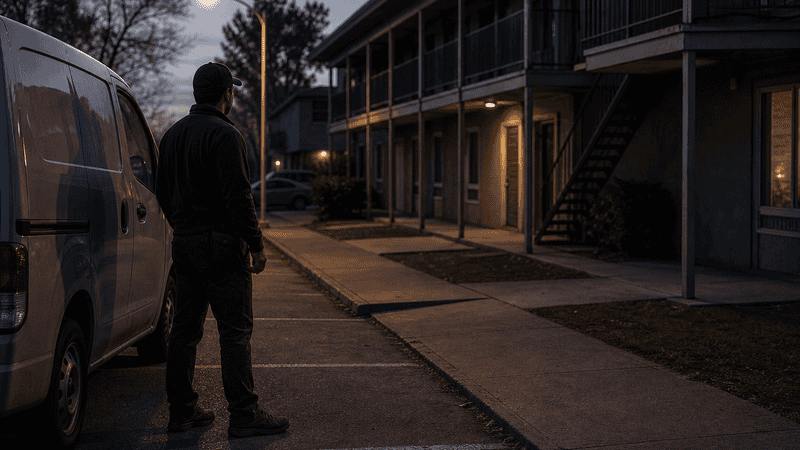
There’s a version of the delivery route that most people never see. It happens after dark, in a parking lot with three working streetlights instead of twelve, at a door where the porch light has been out for weeks. Most nights, nothing happens. But drivers who’ve done this job long enough will tell you — quietly, usually not on camera — that they’ve started carrying things in the cab that weren’t on any onboarding checklist.
This isn’t a list built on worst-case scenarios or dramatic what-ifs. It’s built on the small, unglamorous habits of drivers who’ve been doing this long enough to know what actually gets used, and what just sits in a bag unopened. Some of what’s on this list will surprise you. One item in particular is the one drivers say they wish someone had told them about on day one.
What is the most overlooked self-defense tool for delivery drivers?
The personal alarm. It’s the tool nobody thinks to mention, and it’s often the first thing a seasoned driver reaches for — not the last. A 130dB personal alarm does something pepper spray and stun devices can’t: it draws attention before a situation escalates, without requiring you to get close to anyone.
Here’s what most people don’t realize — the loudest deterrent isn’t always the most aggressive one. A sound that sharp, in a quiet apartment complex or empty parking garage, changes the entire dynamic in seconds. Someone watching from a distance suddenly has witnesses. Drivers clip these to a belt loop or bag strap and forget about them — until the one night they don’t.
Should delivery drivers carry pepper spray or a stun gun?
Most experienced drivers carry both, and there’s a reason it’s not either-or. Pepper spray works at a distance — arm’s length and beyond — which matters when someone is approaching before you’ve had a chance to react. A stun device matters in the moments after that, if distance has already closed.
A compact option like the Runt stun gun fits in a jacket pocket without printing or drawing attention, which matters more than people expect. Drivers don’t want to look armed. They want to look unremarkable — and have something effective if the situation demands it. For pepper spray, a keychain-style unit like Mace pepper spray stays within reach without adding bulk.
What most drivers don’t know until someone tells them: pepper spray has a learning curve. Wind direction, spray pattern, and reaction distance all matter more than people assume. We’ve written a full breakdown of the details most people skip in How to Use Pepper Spray Correctly: 6 Things Most People Never Practice — worth reading before you ever need it, not after.
Why do some delivery drivers install a hidden camera in their vehicle?
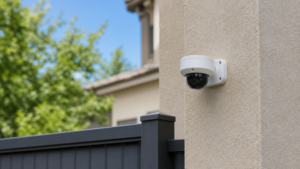
Because what a camera captures often matters more than what a driver can say happened. A hidden dash or interior camera does something no other tool on this list does — it creates a record. Insurance disputes, false claims, porch confrontations, road rage incidents. Drivers who’ve been through one of these situations rarely go back to driving without a camera running.
The detail most people miss: it’s not just about proving what happened to you. It’s about the deterrent effect of someone knowing they’re being recorded, even if they can’t see the lens. A visible camera changes behavior. A hidden one changes it more, because the uncertainty itself does the work.
What’s the one tool drivers say they wish they’d bought sooner?
Almost universally, it’s the flashlight — and not the kind that comes free with a phone case. A serious tactical flashlight does three things a phone light never will: it disorients at close range, it reaches distances a phone can’t touch, and it doubles as a striking tool if a situation goes physical.
There’s something drivers don’t expect until they own one — a flashlight in the 200+ lumen range, aimed directly at someone’s eyes in a dark stairwell or parking lot, buys time in a way nothing else on this list does. It’s not aggressive. It’s not a weapon in the traditional sense. But it changes who has the advantage in a dark space, instantly. Options like the Strikelight 2 are built specifically for this — small enough for a glovebox, bright enough to matter.
Why do drivers carry a diversion safe in their vehicle?
Because the thing most likely to get a driver targeted isn’t a person — it’s cash, packages, or a laptop sitting in plain view. A diversion safe, disguised as something ordinary, solves a problem most drivers don’t think about until it’s already cost them something.
Here’s what’s counterintuitive about this one: it’s not about hiding valuables from a determined thief. It’s about removing the visual trigger that makes a vehicle a target in the first place. Someone glancing into a cab looking for something worth grabbing sees nothing worth the risk. That’s the whole strategy — invisibility, not confrontation.
What’s the sixth tool most drivers don’t think to carry?
A compact fixed-blade or folding knife — not for offense, but for utility that occasionally doubles as defense. Box cutters, seatbelts, packaging. Drivers use a knife more often for mundane tasks than anything else. But the drivers who’ve carried one for years will quietly admit it’s crossed their mind more than once as a last-resort option when nothing else was within reach.
This is the tool least talked about publicly and most carried privately. It doesn’t get marketed the way a stun gun does. It doesn’t have a dramatic use case in most training materials. But ask a driver with ten years on the road what’s in their glovebox, and more often than not, it’s there.
Frequently Asked Questions About Self-Defense Tools for Delivery Drivers
Is it legal for delivery drivers to carry pepper spray or a stun gun in their vehicle?
In most states, yes — both are legal to carry without a permit. A handful of states and cities restrict stun devices or cap pepper spray strength, so it’s worth a quick check of your specific state’s rules before you buy. Most drivers carry one or both without issue nationwide.
What’s the best self-defense tool for a delivery driver who works mostly during the day?
A personal alarm and a hidden dash camera cover most daytime risk — road rage, aggressive customers, parking disputes. Nighttime routes are where stun devices and pepper spray earn their place, since close-contact risk rises after dark in poorly lit areas.
Do delivery companies allow drivers to carry self-defense tools?
Policies vary by company and change often, so it’s worth checking your current employee handbook. Many gig platforms don’t prohibit personal alarms, flashlights, or pepper spray, since these are widely considered everyday carry items rather than weapons.
How do I choose between a stun gun and a Taser-style device?
A stun gun requires direct contact and works at arm’s length. A TASER-style device fires probes from a distance, which matters if someone is approaching before you can react. Drivers who want distance-based protection often lean toward the latter; drivers who prioritize concealability often choose a compact stun gun.
What size flashlight is actually useful for self-defense?
Look for something in the 200–300 lumen range, small enough to fit in a door pocket or glovebox. Anything dimmer won’t disorient effectively at close range. Anything bulkier won’t get carried consistently — and a tool left at home doesn’t help anyone.
Should I keep these tools in my vehicle or on my person?
Both, ideally. A stun device or pepper spray clipped to your body reacts faster than something buried in a console. A flashlight and diversion safe make more sense stored in the vehicle itself, within easy reach but out of sight.
How much does it cost to outfit a delivery vehicle with all six tools?
Most drivers build this kit gradually for well under $150 total. A personal alarm and pepper spray typically run under $20 each, a compact stun device or flashlight in the $25–$50 range, and a diversion safe or basic knife rounding out the rest.
Conclusion
Most drivers who carry all six of these tools never talk about it. They don’t post about it, they don’t bring it up at the warehouse, and they rarely mention it to customers. It’s a quiet habit, built one route at a time, usually after something happened — to them or to someone they know. The goal was never to be ready for a dramatic confrontation. It was to make sure an ordinary night stayed ordinary.
If you’re building your own kit, start with what fits your route and your schedule — not what looks impressive. Browse the full range of stun guns and pepper spray options built for exactly this kind of everyday carry, and put together what actually makes sense for the roads you drive.