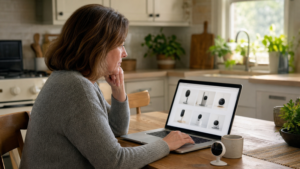
A good hidden camera costs between $30 and $150 for the vast majority of real-world use cases. That range covers cameras with HD recording, motion detection, night vision, and Wi-Fi connectivity. You don’t need to spend more than that to get reliable, effective surveillance for a home, elder care situation, or personal workspace. What matters more than the price tag is matching the right camera type to the right scenario — and that’s where most buyers go wrong.
Here’s what most buying guides won’t tell you: the hidden camera market is quietly one of the most capable product categories in personal security — and most people dramatically overprice or underprice it based on assumptions that don’t hold up. The same $60 camera can be brilliant or useless depending entirely on where you put it and how you power it. Price is the least interesting part of this conversation.
Why does the type of hidden camera matter more than how much you spend?
Think about what you’re actually trying to accomplish. If you want to monitor a common area in your home while you’re away, a hidden camera with Wi-Fi lets you check a live feed from your phone. That’s a fundamentally different tool than a standalone recorder meant to run quietly in an elder care room for days without being noticed. Same price range. Completely different function.
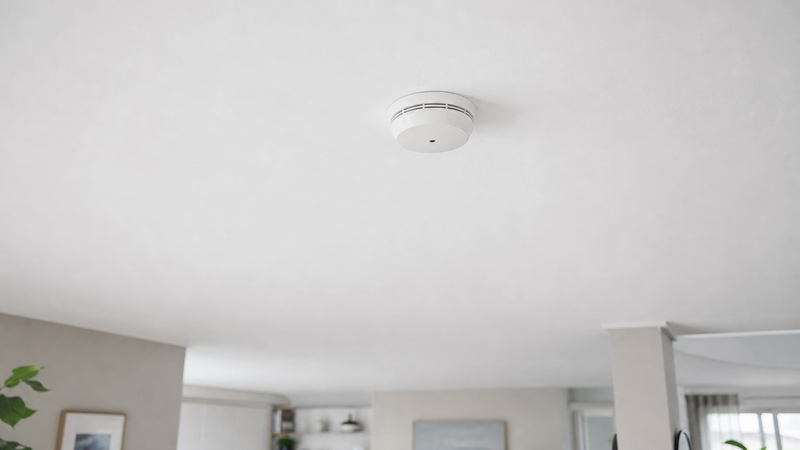
The form factor is where the real decision lives. Hidden cameras come disguised as smoke detectors, alarm clocks, picture frames, USB chargers, and even everyday pens. A hidden camera smoke detector mounts on a ceiling, blends completely into any room, and covers wide angles — ideal for living spaces or entryways. A hidden camera pen goes in a shirt pocket and records a meeting or documents an interaction in the field. Neither is better. They solve different problems.
Spending $120 on the wrong form factor is worse than spending $45 on the right one. That’s the counterintuitive truth the price-focused approach misses entirely.
What hidden camera features actually affect price — and which ones don’t?
Resolution bumps are the most common reason sellers charge more. You’ll see a jump from 1080p to 4K and a corresponding jump in price. For most home monitoring or personal use, 1080p captures more than enough detail to identify a face, read a document, or document an event. 4K matters when you’re covering a large area and need to crop in on specific details. For a bedroom, office, or elder care room, it’s rarely necessary.
Night vision is a feature that legitimately affects price and performance. Cameras with quality infrared night vision in low-light conditions cost slightly more — and they’re worth it if your monitoring situation happens after dark. If you’re watching a caregiver who comes in at night, or monitoring an entryway that loses light in the evening, a hidden camera with night vision is not optional. It’s the job.
Wi-Fi connectivity adds cost but also adds real-time awareness. Without it, you’re reviewing footage after the fact — which is fine for documentation but useless for intervention. With it, you can watch live and receive motion alerts on your phone. The right choice depends on whether you need to know something now or just need a record of what happened.
Local storage via SD card keeps footage on the device itself — no cloud subscription, no connectivity required, no footage stored on a third-party server. A hidden camera with SD card storage is often the right call for elder care monitoring or any situation where privacy and continuous recording matter more than remote access.
How much should you spend on a hidden camera for home security?
For general home monitoring — an entryway, living room, or common area — a Wi-Fi-enabled camera in the $50–$100 range will cover the need reliably. At this price point, you get HD video, motion-triggered recording, phone alerts, and a form factor that disappears into the environment. A smoke detector camera on the ceiling is virtually invisible to anyone not specifically looking for it.
For elder care or caregiver monitoring, the calculus shifts. You want long battery life or a hardwired power option, local SD card storage so footage doesn’t leave the premises, and potentially night vision for overnight monitoring. That combination typically lands between $60 and $130. The investment is different because the stakes are different. If you’re reading this and you’re caring for a parent or an elderly loved one, check out what hidden camera has the longest battery life for elder care — it digs into exactly this situation.
For personal use — documenting interactions, recording conversations in professional settings, or keeping a record while working in unfamiliar environments — a hidden camera pen in the $30–$60 range handles the job. It’s discreet, portable, and leaves no footprint in an environment. You carry it with you and retrieve the footage afterward.
Is there a point where spending more on a hidden camera stops making sense?
Yes. And the line is closer than most people think.
Once you cross $150–$200, you’re typically paying for features that belong in commercial or professional installations: wide-area 4K coverage, enterprise cloud storage, integration with multi-camera systems, or ruggedized outdoor-rated housings. For a private individual monitoring a single room or personal environment, none of that adds practical value.
The most common overspend is buying a camera with cloud storage subscriptions when local SD card storage would work fine. You end up paying monthly fees for footage archiving you don’t need. A solid SD card camera with motion-triggered recording stores days of relevant footage without any ongoing cost.
The most common underspend is buying the cheapest option without checking whether it has night vision or adequate battery life for the situation. A $25 camera that runs out of power in four hours and can’t see in low light isn’t a bargain. It’s a gap in your coverage when you need it most.
What should you check before you buy any hidden camera?
Run through this before you hit the purchase button:
- Power source. Battery-powered or hardwired? Battery cameras are portable but require recharging. Hardwired or plug-in cameras run continuously but need a power source nearby.
- Storage method. SD card, cloud, or both? Know whether your situation requires local storage or whether remote access matters more.
- Lighting conditions. Will this camera run in low light or darkness? If yes, confirm it has infrared night vision — not just “low light” marketing language.
- Form factor. Does the disguise fit the environment? A smoke detector belongs on a ceiling. An alarm clock belongs on a nightstand. A pen belongs in a pocket. Mismatched form factors get noticed.
- Legal use. Check your state’s recording laws before you deploy any camera. Laws around consent and recording vary. I’m not your attorney — but ignoring this isn’t worth it.
Five questions. Fifteen minutes of research. That’s the difference between a camera that works and one that sits in a drawer.
Frequently Asked Questions About Hidden Camera Costs
What is the average price of a hidden camera?
Most hidden cameras sold for personal use fall between $30 and $150. Cameras at the lower end typically offer basic HD recording and local storage. Mid-range models add Wi-Fi connectivity, motion detection, and night vision. Cameras above $150 generally offer features more suited to commercial use than everyday home or personal monitoring situations.
Can a cheap hidden camera still produce good footage?
Yes, in the right conditions. A $40–$60 camera in a well-lit room with SD card storage can produce clear, usable footage. Problems arise when a budget camera lacks night vision, drains its battery quickly, or uses poor compression that degrades image quality. Cheap cameras fail in edge cases — darkness, extended run time, or wide-angle coverage requirements.
Do I need to pay a monthly fee for a hidden camera?
Not if you choose local storage. Hidden cameras that record directly to an SD card have no subscription cost. Cameras with cloud storage often require monthly or annual fees ranging from $3 to $10 per month. For most personal use situations, a camera with SD card storage eliminates ongoing costs without sacrificing footage quality or reliability.
What is the best hidden camera for monitoring a caregiver?
For caregiver monitoring, prioritize local SD card storage, long battery life or a plug-in power source, and night vision for overnight coverage. A smoke detector camera mounted on the ceiling works well because it provides wide-angle coverage and attracts no attention. For more on this specific use case, see what camera works best in low light for elder care monitoring.
Are Wi-Fi hidden cameras worth the extra cost?
If real-time awareness matters to you, yes. Wi-Fi cameras let you view a live feed and receive motion alerts on your phone — useful when you need to know something as it happens. If your goal is documentation and review after the fact, a camera with SD card storage at a lower price point accomplishes the same outcome without requiring a network connection or ongoing app access.
How long can a hidden camera record on a single charge?
Battery life varies significantly by model and recording mode. Motion-triggered cameras conserve power and can last days between charges. Continuous recording cameras may last only 2–6 hours on battery. If your situation requires extended unattended recording — elder care monitoring, overnight surveillance — look for a plug-in camera or one with a substantial battery specifically rated for long-duration use.
What hidden camera form factor is hardest to detect?
Cameras disguised as functional everyday objects — smoke detectors, alarm clocks, USB chargers — are consistently the hardest to detect because they belong in the environment. A smoke detector on a ceiling is rarely questioned. A USB charger on a desk is unremarkable. The key is matching the disguise to the room so the device looks like it was always there.
Is a hidden camera legal to use in my home?
Generally, recording in your own home is permitted, but audio recording and placement in spaces where people have a reasonable expectation of privacy — like bathrooms — are subject to stricter rules that vary by state. I’m not an attorney and this isn’t legal advice. Before you install any camera, look up your state’s recording consent laws. It takes ten minutes and it matters.
The hidden camera market has gotten remarkably capable in the sub-$100 range. What used to cost several hundred dollars — reliable HD recording, night vision, motion detection, Wi-Fi alerts — now ships in a device that looks like something you’d pick up at a hardware store. The technology isn’t the barrier anymore. The thinking is. Know your situation, match the right tool to it, and don’t let price be the thing that drives the decision.
Browse our full selection of Wi-Fi hidden cameras and SD card hidden cameras to find the one that fits your environment. I don’t want you to need it. But if you do, I want you to have the right one.