
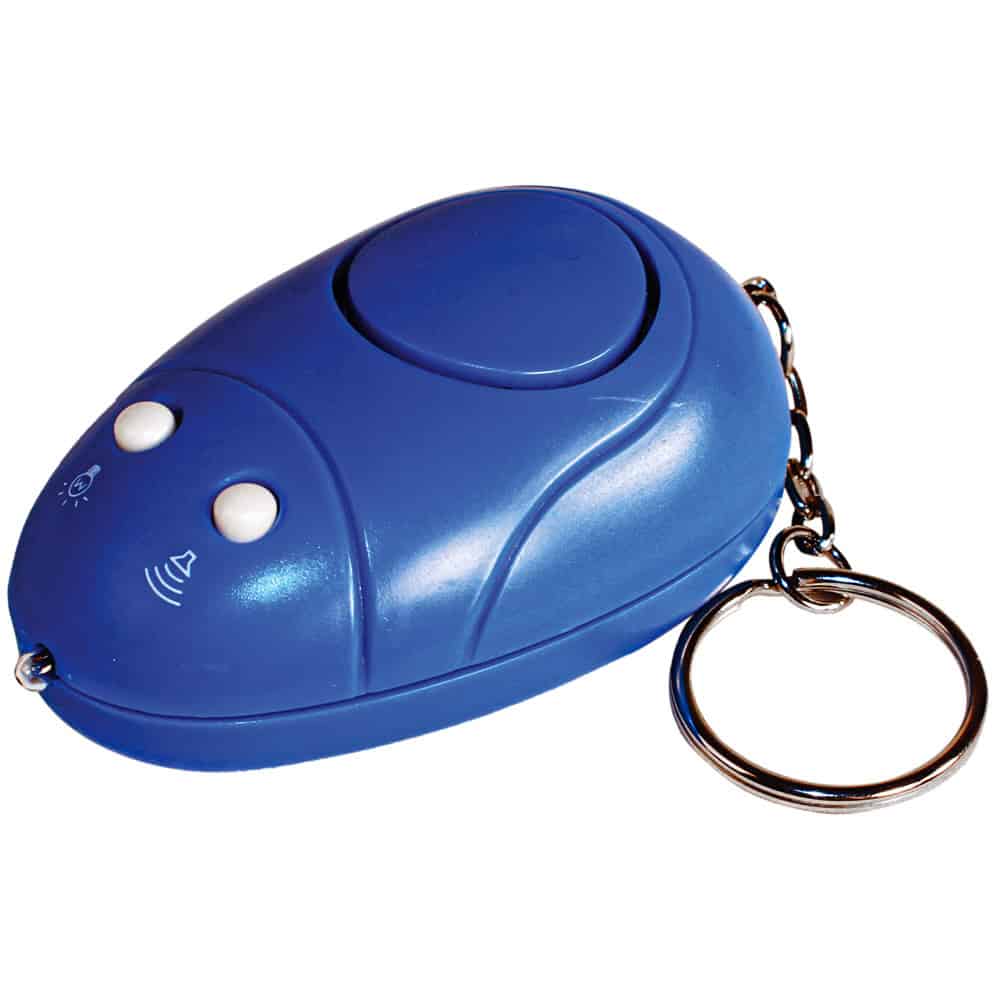
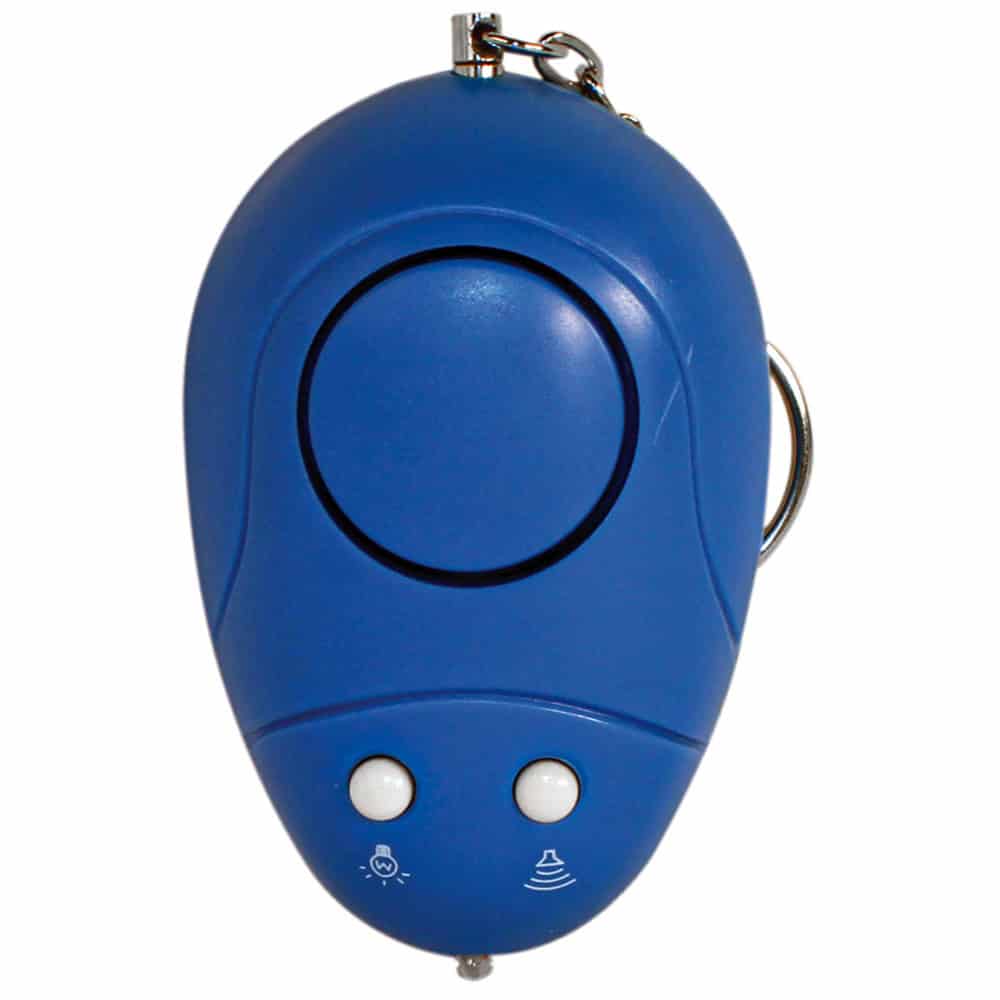
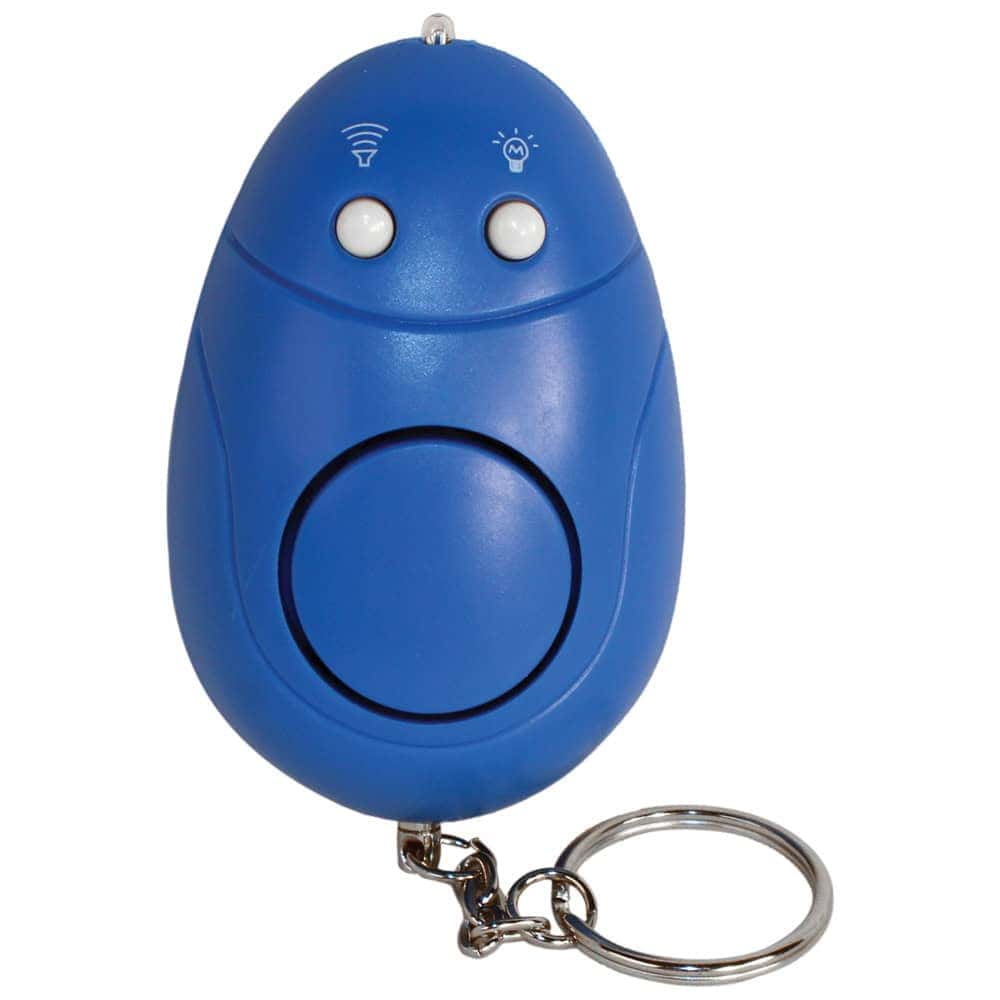
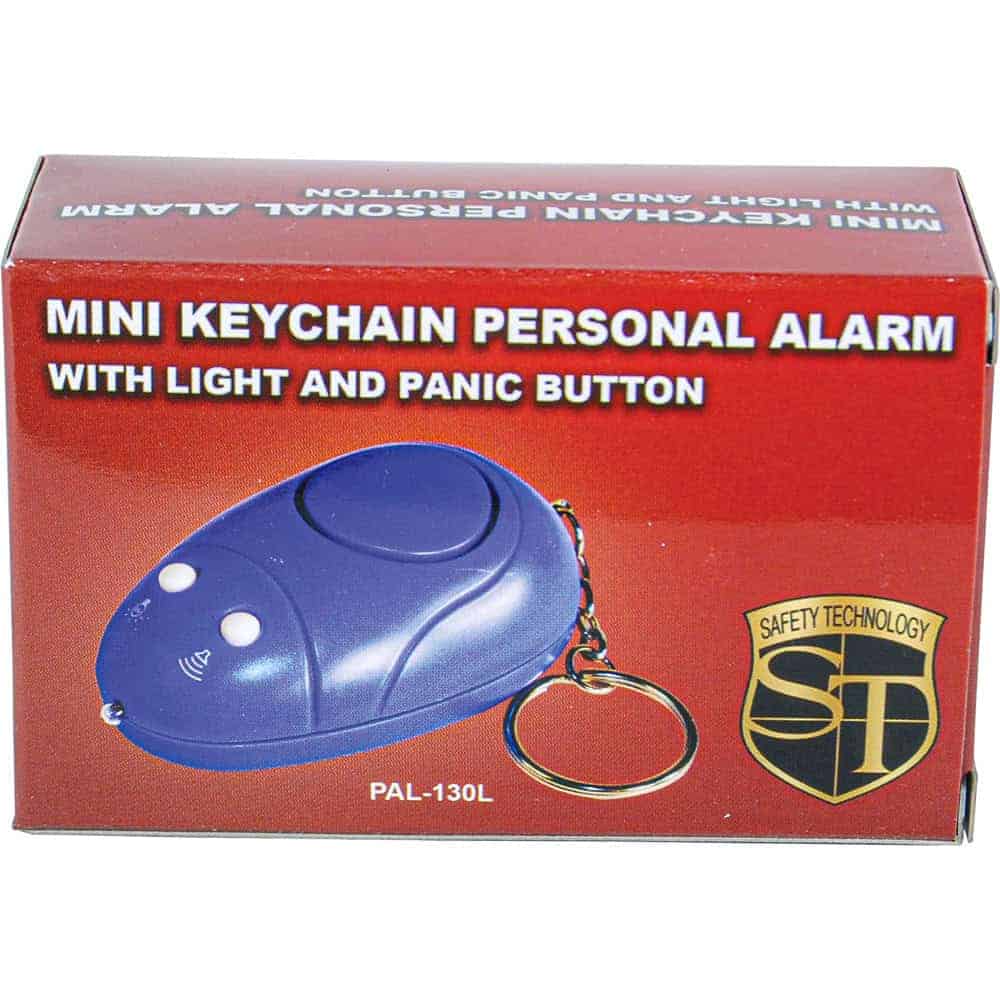
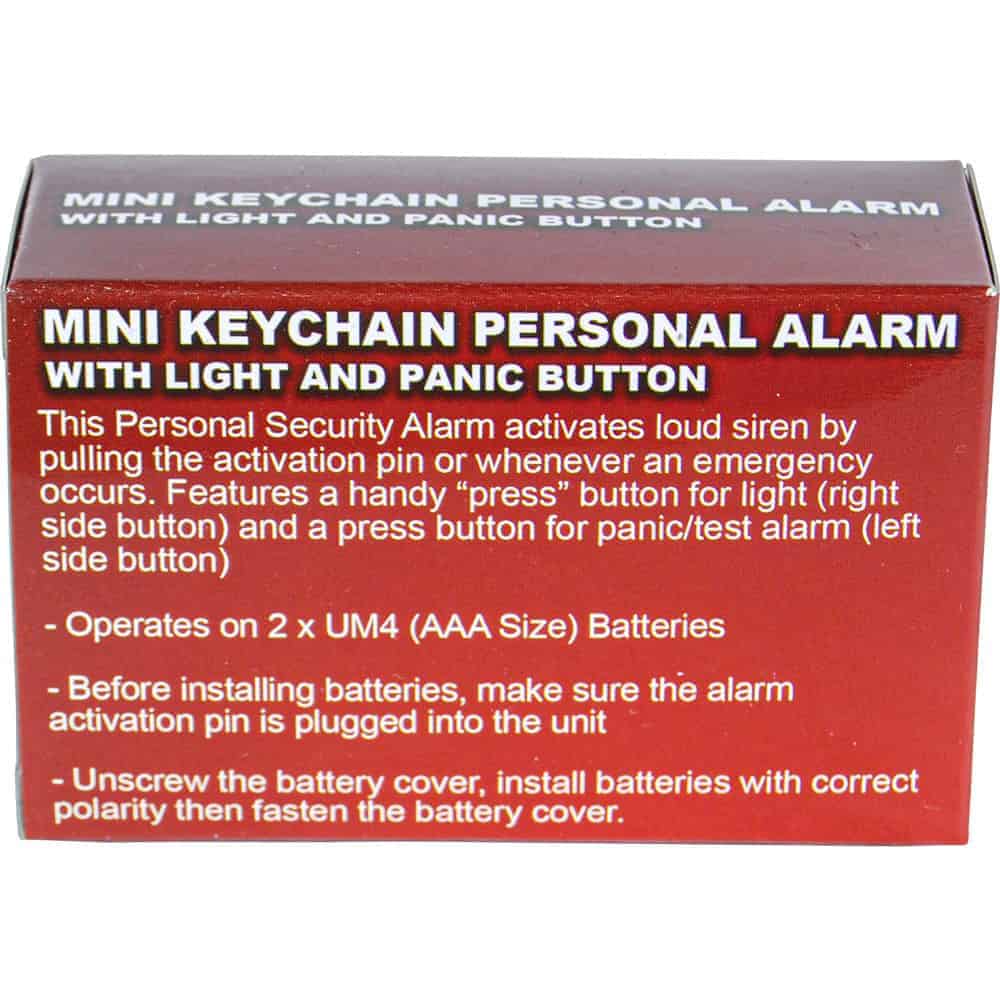
Keychain Personal Alarm with LED Flashlight – 130dB Siren, Pull-Pin or Button Activation, 2 AAA Batteries Included, Blue, 3″ x 1″, 0.17 lbs, Safety Technology
$10.00
Buy with Confidence
Covered by a 30-Day Money Back Guarantee. If it's not right for you, returns are easy and hassle-free.

Secure checkout • 100% Satisfaction Guaranteed • 30 Day Money Back Guarantee • Easy Returns • Fast Customer Support
This one sits on your keychain and does two things: puts out a 130dB alarm when you pull the pin or press the button, and works as a small flashlight without triggering the alarm. That combination is more useful than it sounds. A lot of situations where you might want an alarm also involve low light, and being able to use the light separately without accidentally setting off the siren is a useful feature.
- 130dB siren — that's genuinely loud, the kind that draws attention from a significant distance
- Two activation methods — pull the keychain pin or press the button on top, whichever is faster
- Standalone flashlight mode — use the light without triggering the alarm
- Keychain carry — already on your keys, already in your hand when you need it
- Two AAA batteries included — no hunting for batteries before you can use it
The One That’s Actually With You When You Need It
The best personal alarm is the one on your keychain — the one that’s already in your hand when you’re walking to your car, unlocking your door, or getting out of an elevator. This one clips onto your keys, weighs 0.17 lbs, and is about as simple as a safety tool gets.
Pull the pin or press the button. 130dB alarm goes off. That’s the whole operation.
Who This Keychain Alarm Is For
College students heading back to their dorms at night. People who commute to parking garages or walk to their car after late shifts. Joggers and walkers who go out alone, especially early morning or after dark. Anyone who wants something on their keys that can draw immediate attention if something goes wrong.
It’s also useful for parents who want to give a teenager a first line of personal safety without the complexity or legal considerations of other options. Personal alarms are legal everywhere, go through airport security, and require no training to use. The flashlight mode adds a little extra usefulness on top of that for getting keys in locks at night.
Is This the Right Choice for You?
Choose this Keychain Alarm if you want:
- Something already on your keys that activates instantly when you need it
- A 130dB alarm with both pull-pin and button activation options
- A built-in flashlight that works independently from the alarm
Consider something else if you need:
- A physical deterrent — alarms draw attention but don’t physically stop someone
- Longer range capability — pepper spray or similar options provide distance
How It Actually Works
Two ways to activate the alarm: pull the pin that connects to the keyring, or press the button on the top of the unit. The pull-pin method is useful if you want to be able to drop or throw the device and have it continue alarming — the pin separates, the alarm stays on. The button method works for situations where you have a moment to press deliberately.
The flashlight function operates independently. You can use it to find a keyhole, light your path, or check something in low light without accidentally sending a 130dB siren into the night. That’s a thoughtful design choice that a lot of keychain alarms skip.
At 130dB, this is loud in a meaningful way — it’s in the same range as a jet engine at distance, and it will be heard. From across a parking lot, from the next floor of a building, from inside a vehicle with windows up. It draws attention, which is exactly what it’s designed to do.
Quick Comparison: How Does the Keychain Alarm Stack Up?
| Feature | Keychain Alarm with Light | Pepper Spray | Stun Gun | Basic Whistle |
|---|---|---|---|---|
| Legal Everywhere | Yes ✓ | Mostly (varies by state) | Varies by state | Yes ✓ |
| No Training Needed | Yes ✓ | Some learning helps | Some learning helps | Yes ✓ |
| Alarm Volume | 130dB ✓ | N/A | Sometimes 120dB | ~115dB |
| Built-in Flashlight | Yes ✓ | No | Sometimes | No |
| Physical Deterrent | No | Yes ✓ | Yes ✓ | No |
| Best For | Keychain carry, attention-drawing | Close-range deterrence | Contact deterrence | Minimal, basic signaling |
Practical Details
Weight: 0.17 lbs. Dimensions: 3″ x 1″. Alarm: 130dB. Activation: pull-pin or button. Flashlight: included, operates independently. Battery: 2 AAA (included). Color: blue. Includes keyring. Manufacturer: Safety Technology. Legal in all 50 states, no permits required.
If you want a simple, reliable alarm that’s already in your hand every time you reach for your keys, this is a practical choice — 130dB, a usable flashlight, and two ways to activate it for under ten dollars.
Frequently Asked Questions
How do I turn the alarm off once it’s been activated?
Reinsert the pin to stop the alarm when activated by pull-pin. If activated by button, press the button again to silence it. The pull-pin design is intentional — once pulled, the alarm continues even if the device is dropped or grabbed, which is part of what makes it useful in an actual situation. Just keep the pin accessible to silence it when the situation is resolved.
Is 130dB actually that loud?
Yes. 130dB is the approximate level of a jackhammer at close range or a jet at distance. In a quiet parking lot or neighborhood, it will be heard from a significant distance. Indoors it’s genuinely startling. The point is to draw as much attention as possible as quickly as possible — 130dB does that effectively. Just avoid testing it directly next to someone’s ear.
How long do the batteries last?
AAA batteries in alarm-ready standby last a long time — we’re talking months to a year or more depending on how often the flashlight is used. The alarm itself drains batteries quickly when sounding, but you’re not running it continuously. Check them once in a while or replace them annually to make sure they’re ready when you need them.
Can I take this on an airplane?
Personal alarms are generally permitted in carry-on and checked baggage. TSA doesn’t restrict them the way they do pepper spray or stun guns. That said, it’s worth verifying current TSA guidelines before travel — rules can change — and be prepared to explain what it is if it catches an agent’s attention during screening. The flashlight function makes it easy to demonstrate it’s a simple device.
| Manufacturer | Safety Technology |
|---|---|
| Decibles | 130 db |
| Battery | 2 AAA |
| Color | Blue |
| Included | Keyring |
| Weight | 0.17 lbs |
| Dimensions | 3" x 1" |
Additional information
Related products
-

Nap Alarm Anti-Drowsiness Driver Alert – 80dB Ear-Worn Position Sensor, Sounds on Head Nod, Works for Drivers, Security Guards, Students, 0.06 lbs, Battery Included, 1.88″ x 2.25″
$9.95 Add to cart -

Tactical Black Twist Pen with Glass Breaker and Pocket Clip – Aircraft Aluminum, Extra Ink Refill Included, 6.25″ Length, Everyday Carry Self-Defense Writing Pen
$10.95 Add to cart -

GrizGuard Bear Spray 7.9 oz – 30-Foot Fogger Range, Hip Clip Holster, Glow-in-the-Dark Safety Wedge, 32-Page Bear Safety Booklet Included
$49.00 Add to cart -
Electronic Dog Repeller and Trainer with Ultrasonic High-Frequency Sound – Dual Training and Deterrence Modes, 35-45kHz Range, 9V Battery, ABS Plastic Body
$19.00 Add to cart