

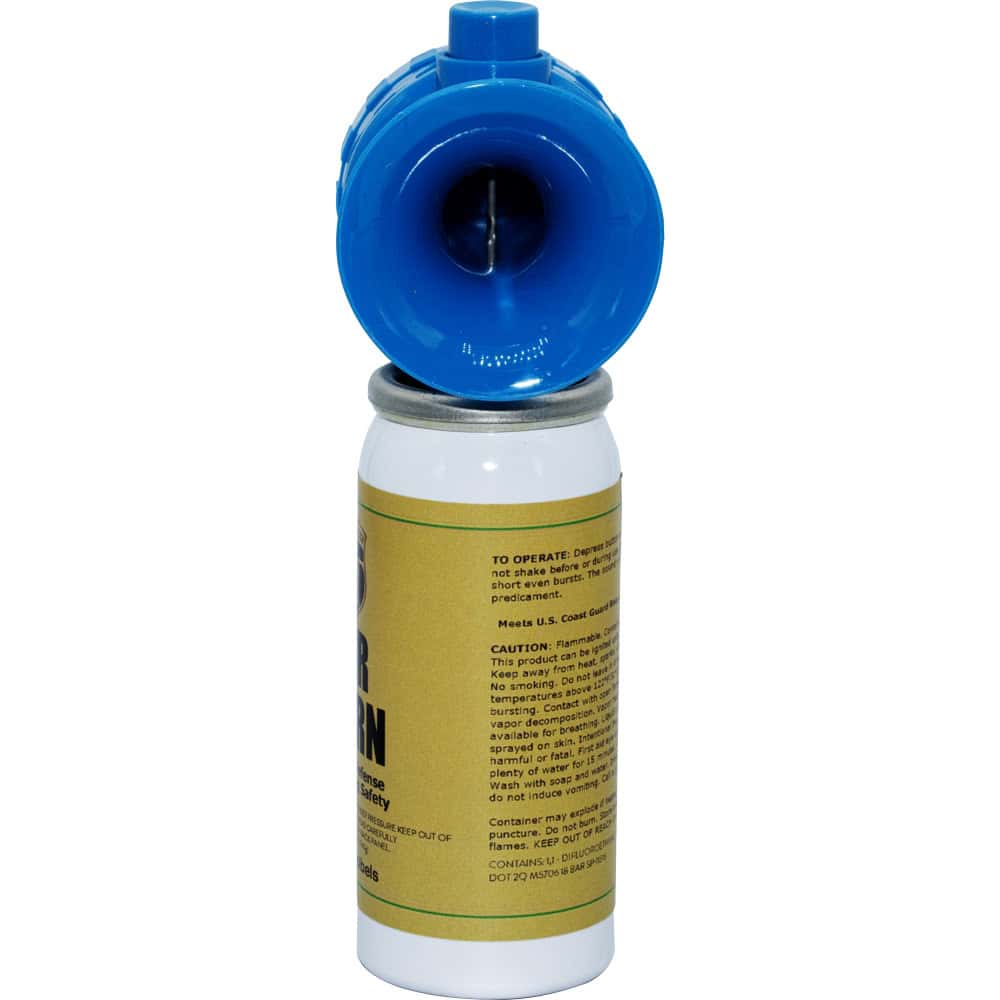
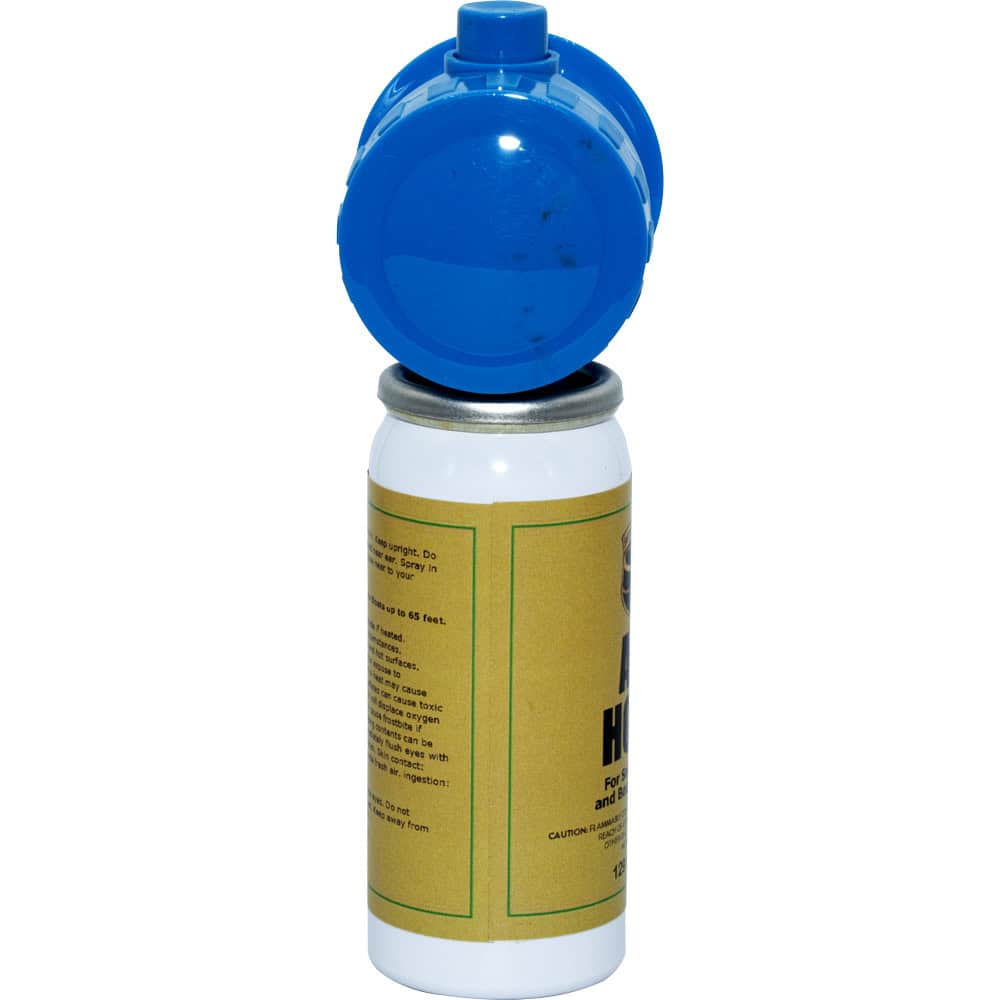

Safety Technology 129dB Air Horn – Compact Personal Alarm & Boating Safety Signal, US Coast Guard Compliant, Fits Boats Up to 65 Feet, 0.3 lbs, 5.13″ x 1.75″
$14.95
Buy with Confidence
Covered by a 30-Day Money Back Guarantee. If it's not right for you, returns are easy and hassle-free.

Secure checkout • 100% Satisfaction Guaranteed • 30 Day Money Back Guarantee • Easy Returns • Fast Customer Support
Picked one of these up for the kayak and ended up carrying it everywhere. At 129 decibels, it's the kind of sound that carries across a lake, a parking lot, or a campsite without any trouble. Coast Guard approved for boats up to 65 feet, but honestly it's just as useful on a hiking trail or in a back pocket.
- 129dB output — loud enough to be heard from 65 feet away and then some
- US Coast Guard compliant — meets requirements for vessels up to 65 feet
- Compact and light — 0.3 lbs, fits in your hand or a jacket pocket without any fuss
- No batteries needed — compressed air canister, ready to go whenever you are
- Multi-use tool — works on the water, on trails, or as an audible warning in everyday situations
Loud, Simple, and Always Ready
There’s something to be said for a tool that doesn’t require batteries, a charging cable, or any setup at all. This air horn is one of those things. You pick it up, you press the button, and 129 decibels comes out. That’s about as simple as it gets.
It’s small enough that you actually keep it around — on the boat, clipped to a bag, tossed in a kayak dry bag. And when you need it, you don’t have to think about it.
Who This Air Horn Is For
Boaters are the obvious crowd. If you’re on the water with a vessel under 65 feet, you’re supposed to have a sound-signaling device on board anyway. This one checks that box without taking up any real space.
But it’s also worth keeping in mind for hikers, campers, and trail runners. If you run into a bear or need to signal for help, 129 decibels travels a lot farther than your voice does. Dog walkers have found it useful for keeping off-leash dogs at a distance too — one blast usually gets the point across.
It’s also a reasonable option for anyone who wants a personal alarm that doesn’t rely on a battery that may or may not be charged when you need it.
Is This the Right Choice for You?
Choose this air horn if you want:
- A no-battery signaling device for boating, kayaking, or water sports
- A compact, always-ready alarm for hiking or outdoor activities
- US Coast Guard compliance without carrying bulky equipment
Consider something else if you need:
- A continuous alarm — air horns have limited capacity per canister
- Something electronic with rechargeable capability for everyday carry
How It Works and Why It’s Worth Having
The canister uses compressed air — no moving parts to break, no batteries to die. Press the button and you get a sharp, loud blast that carries across open water or open terrain without any effort. The 129dB rating is real — test it once in an open space and you’ll know it works.
At 5.13″ x 1.75″ and 0.3 lbs, it fits in a hand, a cup holder, a life jacket pocket, or a backpack side pouch. It’s the kind of thing you toss in and forget about until you actually need it.
The sound output is directional enough to be useful as a warning signal — aimed toward a threat or toward a rescue team, it does exactly what you’d want it to do.
Quick Comparison: How Does This Air Horn Stack Up?
| Feature | Air Horn (129dB) | Electronic Personal Alarm | Whistle | Pepper Spray |
|---|---|---|---|---|
| Volume | 129dB ✓ | 120-130dB | ~100-110dB | N/A |
| Battery Required | No ✓ | Yes | No ✓ | No ✓ |
| Coast Guard Compliant | Yes ✓ | No | No | No |
| Range of Sound | 65 feet ✓ | Moderate | Short-Moderate | N/A |
| Ease of Use | One press ✓ | One press ✓ | Requires breath | Aim required |
| Best For | Boating, hiking, outdoor | Daily carry, walking | Hiking, emergency | Close-range defense |
Practical Details
Weighs 0.3 lbs. Measures 5.13″ x 1.75″ — fits easily in hand or pocket. No batteries required; uses compressed air canister. Works as a US Coast Guard compliant sound signal for vessels up to 65 feet. Legal for use in all 50 states and most outdoor settings. No warranty details listed — inspect canister on receipt.
One of those tools that earns its spot in any kit — whether that’s a tackle box, a dry bag, or a hiking daypack. Simple, loud, and there when you need it.
Frequently Asked Questions
How many blasts does the canister provide?
The canister provides multiple short blasts — typically enough for signaling purposes in most emergency or boating scenarios. The exact number depends on blast length, but for standard short horn signals it’s more than adequate for a day on the water. If you use it heavily for testing, plan to replace the canister before your next outing.
Is this actually loud enough to scare off animals on a trail?
129 decibels is genuinely loud — about the level of a jackhammer up close. Most wildlife, including bears, respond to sudden loud sounds. It’s not a guarantee, but it’s a reasonable deterrent and a lot more practical to carry than most alternatives. Many hikers keep one clipped to a pack strap for exactly that reason.
Can I take this on an airplane?
No — compressed air canisters are not permitted in carry-on or checked baggage by TSA regulations. If you’re traveling by air to a boating or camping destination, plan to purchase a replacement canister when you arrive. It’s worth knowing ahead of time.
Does it work in cold weather or on the water?
Compressed air canisters can lose some pressure in very cold temperatures, which may reduce output. For most typical outdoor conditions — including on-water use — it performs reliably. If you’re heading into extremely cold weather, keep it in an inside pocket to maintain temperature before use.
| Manufacturer | Safety Technology |
|---|---|
| Decibles | 120 db |
| Range | 65 feet |
| Weight | 0.3 lbs |
| Dimensions | 5 1/8" x 1 3/4" |
Additional information
Related products
-
Electronic Dog Repeller and Trainer with Ultrasonic High-Frequency Sound – Dual Training and Deterrence Modes, 35-45kHz Range, 9V Battery, ABS Plastic Body
$19.00 Add to cart -

Nap Alarm Anti-Drowsiness Driver Alert – 80dB Ear-Worn Position Sensor, Sounds on Head Nod, Works for Drivers, Security Guards, Students, 0.06 lbs, Battery Included, 1.88″ x 2.25″
$9.95 Add to cart -

Water Overflow Sensor Attachment for PAL-1 and PAL-1LIGHT Personal Alarm – Flood and Leak Detection with Suction Cup Mount
$2.00 Add to cart -
Safety Technology 3000 Lumen LED Zoomable Self-Defense Flashlight – Aircraft-Grade Aluminum, Rechargeable 26650 Battery, 1300-Foot Beam, Strobe and SOS Modes, Belt Clip, 6.22 x 1.61 Inches
$44.95 Add to cart