


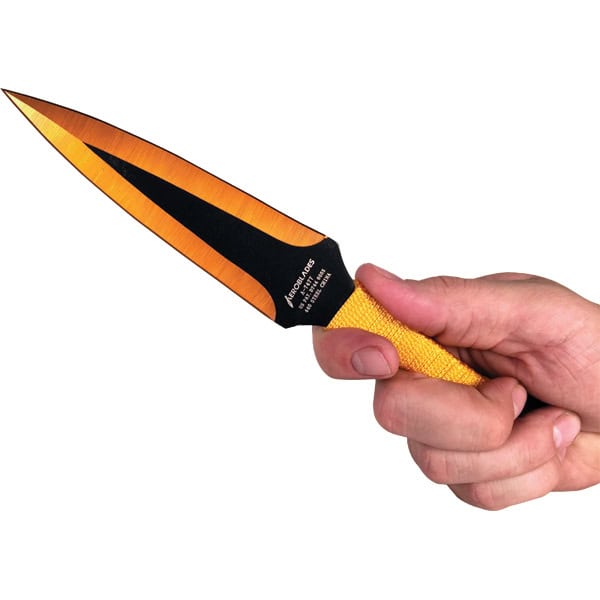

2 Piece Throwing Knife Set Black Gold BioHazard Design – 9-Inch Length, 440 Stainless Steel, Beginner to Intermediate, Includes Nylon Sheath Pouch, 0.7 lbs Total Weight
$15.95
Buy with Confidence
Covered by a 30-Day Money Back Guarantee. If it's not right for you, returns are easy and hassle-free.

Secure checkout • 100% Satisfaction Guaranteed • 30 Day Money Back Guarantee • Easy Returns • Fast Customer Support
A solid starter set for anyone getting into throwing knives. Two 9-inch blades in a black and gold BioHazard pattern, made from 440 stainless steel, with a nylon sheath pouch included. Good balance for the price and a nice enough look that they'd display well when you're not throwing them.
- Two 9-inch 440 stainless steel blades — durable, holds up to repeated throwing practice
- Black and gold BioHazard design — distinctive finish, stands out on a target
- Balanced for throwing — sized and weighted for beginner to intermediate throwers
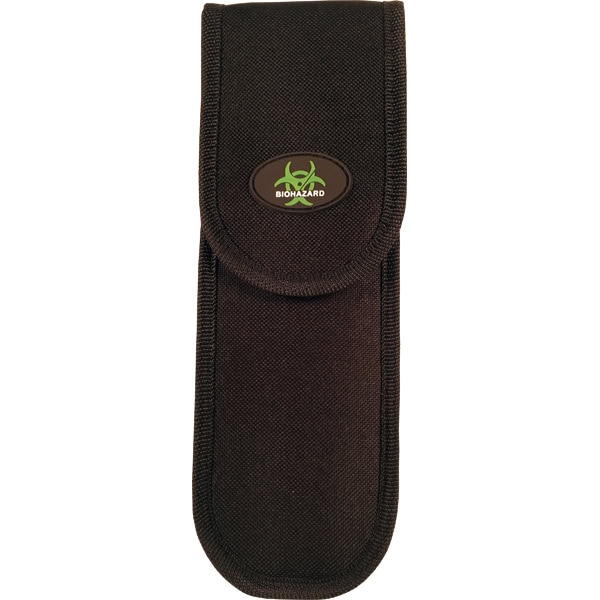
- Includes nylon sheath pouch — keeps both knives together and protected
- Measures 9 inches x 1.38 inches per knife — a practical size for learning proper rotation
Two Good Throwing Knives at a Price Where Practicing Doesn’t Feel Expensive
Throwing knife practice has a way of putting wear on your blades. They hit targets, they hit the ground, they bounce off misses. Starting with a pair of quality 440 steel knives at this price point makes sense — you’re getting real knives that hold up to practice, not cheap props, without spending money you’d rather save for something else.
The 9-inch length and the weight distribution make these a practical starting point. Long enough to develop good rotation habits, balanced well enough that you’re not fighting the blade through the air.
Who These Throwing Knives Are For
Beginners who want to get started without overthinking their first purchase. At $16 for two knives with a sheath, it’s easy to try knife throwing without any real commitment. If you enjoy it, you’ve got a functional pair to keep practicing with. If it’s not your thing, you’re not out much.
Intermediate throwers looking for a backup set or an extra pair to keep at a second target station would find these useful. 440 steel is a solid working material — they’ll take repeated throws without chipping or bending easily.
The BioHazard design has obvious appeal if aesthetics matter to you. They look good displayed on a rack and they’re easy to spot against a wooden target or board.
Is This the Right Choice for You?
Choose this throwing knife set if you want:
- A quality starter set without a high price tag
- Two knives — enough to practice a rhythm without constantly retrieving
- 440 stainless steel that holds up to regular practice
- A distinctive look that’s easy to spot at a target
Consider something else if you need:
- Competition-grade blades with precision weight specifications
- A larger set — this is two knives, not three or five
How It Actually Works
These are no-handle throwing knives — just blade, which is the standard for rotational throwing. No separate handle means no grip to worry about and consistent flight regardless of which end you hold. At 9 inches, they’re in the sweet spot for learning standard rotation distances of around 10–15 feet.
440 stainless steel is a practical choice for practice knives. It’s tough enough to handle repeated impact against wood targets without chipping, and it resists rust well when you’re leaving them in a sheath in a garage or shed. It’s not the highest-end steel you can get, but it’s the right material for what these are meant for.
The nylon sheath pouch holds both knives and keeps them from rattling around in a bag or drawer. Nothing fancy, just functional — same as the knives themselves.
Quick Comparison: How Does This Set Stack Up?
| Feature | 2-Pc BioHazard Set (9″) | 3-Pc Assorted Set (6.5″) | Premium Throwing Knives | Beginner Foam/Rubber Trainers |
|---|---|---|---|---|
| Blade Length | 9 inches ✓ | 6.5 inches | 12–16 inches ✓ | N/A (foam) |
| Number of Knives | 2 | 3 ✓ | Varies (1–5) | Varies |
| Steel Quality | 440 Stainless ✓ | 440 Stainless ✓ | High-carbon ✓ | No steel |
| Best Skill Level | Beginner–Intermediate | Beginner–Intermediate | Intermediate–Advanced | Beginner ✓ (safest) |
| Price | Budget ✓ | Budget ✓ | $40–$100+ | $10–$25 |
| Best For | Standard-distance practice | Short-distance/variety | Serious practice, competition | Safe indoor training |
Practical Details
Each knife measures 9 inches long by 1.38 inches wide. Material: 440 stainless steel. Finish: black and gold BioHazard design. Set includes two knives and one nylon sheath pouch. Total set weight: 0.7 lbs. No handle — full-blade design standard for rotational throwing. Intended for sport and recreational throwing at appropriate targets.
A practical, good-looking pair of throwing knives at a price that makes learning the skill feel low-stakes — pick them up and get throwing.
Frequently Asked Questions
Are these good for beginners?
Yes — they’re described as beginner to intermediate, and that’s accurate. The 9-inch length is a common recommendation for learning standard rotational throwing. They’re not so heavy that they’re hard to throw, and not so light that they don’t have good follow-through. If you’re just starting out, these will teach you what you need to learn without spending more than you have to on your first set.
What kind of target should I use?
Soft wood is the standard — a thick section of pine or a purpose-built end-grain target board works well. The knife needs to stick, and hard materials like OSB or plywood don’t give enough. A lot of throwers build their own target out of 2x4s or 2x6s bundled and bolted together. Set it up at a safe distance with a good backstop and you’re set.
Do these need to be sharpened before use?
For throwing purposes, a razor edge isn’t necessary — in fact, most experienced throwers keep throwing knives at a moderate edge rather than razor-sharp, since it makes handling safer during practice. These come with a reasonable working edge from the factory. If you want to sharpen them further for utility use, a standard sharpener handles 440 steel fine.
What distance should I start throwing from?
For a 9-inch knife, most beginners start at about 10 feet and adjust from there. Throwing knife rotation is about finding the distance where the blade completes the right number of rotations to stick point-first. At 9 inches, one-rotation distance is typically in the 10–12 foot range. Start there, watch where the blade hits, and adjust your distance until you’re sticking them consistently.
| Type of Knife | Throwing |
|---|---|
| Material | 440 Steel |
| Holster | Nylon |
| Weight | 0.7 lbs |
| Dimensions | 9" x 1.38" |
Additional information
Related products
-
Assisted Open Folding Pocket Knife 8.5 Inch Overall – 4-Inch 3Cr13 Steel Blade, Slim Profile, Belt/Visor Clip Included, Available in Gold & Black, Silver, Silver & Black
$20.65 Select options This product has multiple variants. The options may be chosen on the product page -

Assisted Open Folding Pocket Knife with Gold Trim – 3.5″ Two-Tone 3Cr13 Steel Blade, 8″ Overall, Stainless Steel Handle, Belt Clip Included
$18.35 Add to cart -

Kubotan Aircraft Grade Aluminum Keychain Self Defense Tool – 5.5 Inches, 0.17 lbs, Keyring Included, Black, Red, or Silver
$10.00 Select options This product has multiple variants. The options may be chosen on the product page -

Assisted Open Folding Pocket Knife 8 Inch Overall – 3.5-Inch 3Cr13 Steel Blade, Stainless Steel Handle, Belt Clip and Lanyard Hole, Available in Green, Orange, Purple, Red
$20.85 Select options This product has multiple variants. The options may be chosen on the product page
Reviews
There are no reviews yet.